
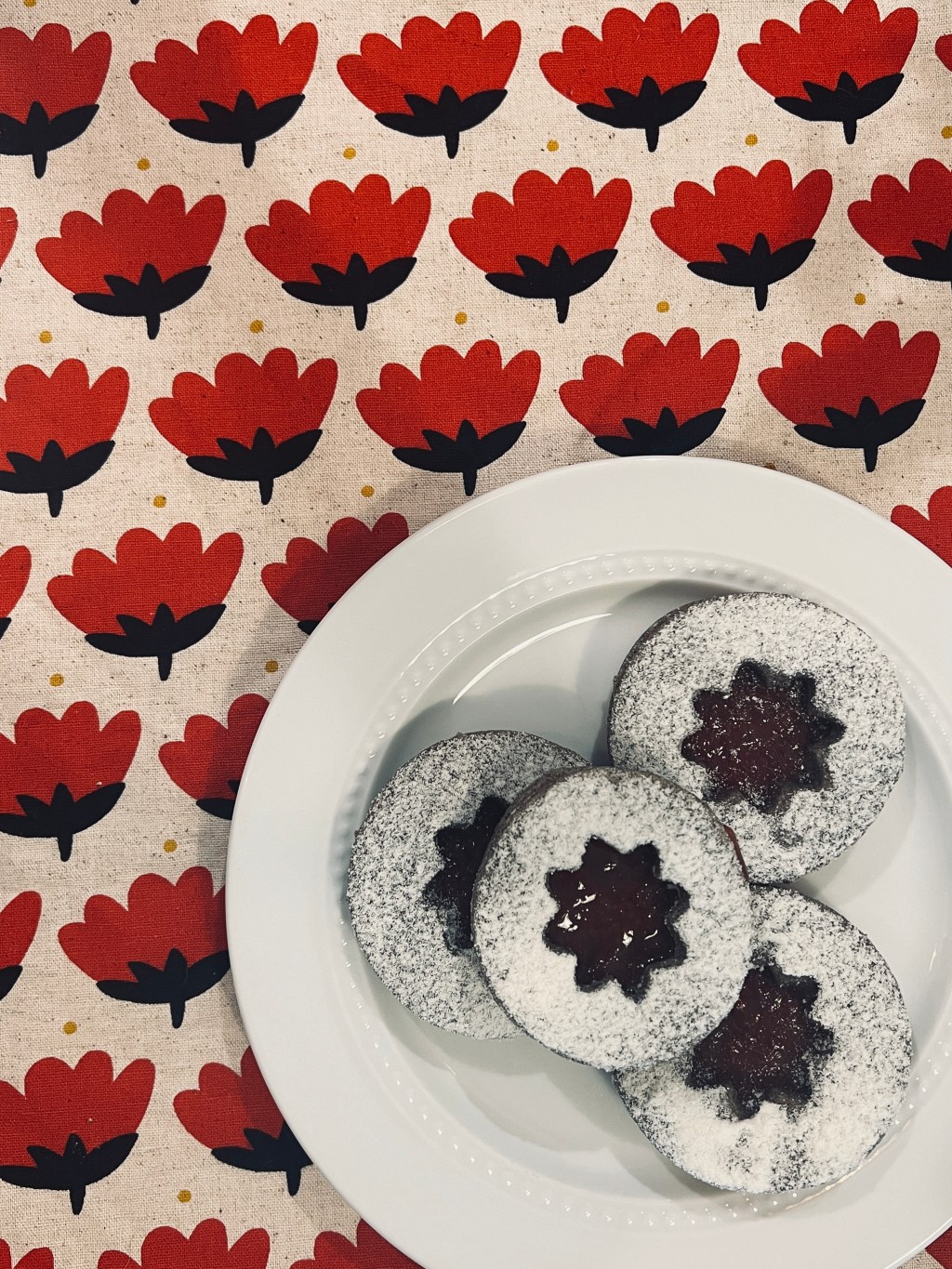
Every year, around late spring, one of my favorite ingredients emerges for a limited time only: rhubarb. The first sight of the bright pink stalks brings with it the reassurance that the mercurial weather of early spring (sunny and 65 one day, frigid the next) has passed and the anticipation of warm summer nights, rooftop grilling, and lazy afternoons picnicking in the park.
Rhubarb has been a summer staple for as long as I can remember. My dad had a top-secret wild rhubarb patch next to the Eagle River in Minturn, CO. Every year, he’d visit, and every year, he’d be rewarded with a bounty of pink and green stalks. He’d bring back his harvest along with a few pints of strawberries from the local City Market and we’d celebrate the beginning of summer with strawberry rhubarb pie. This wasn’t a picture-perfect pie – the juices from the tart rhubarb and peak-summer sweet strawberries would bubble up and break through the crust, a patchwork of buttery pastry. But looks don’t really matter when you are closing your eyes to savor each bite.
Any rhubarb that didn’t make it into the pie, we’d chop up and vacuum seal to put in the freezer, to be broken out when we needed a taste of early summer.
Whenever I see rhubarb at the farmer’s market or (if you’re lucky) in the produce section at the grocery store on the corner, I will grab armfuls of the stalks without a second thought. This is for a few reasons:
- Rhubarb is fleeting. There one week, gone the next. Its seasonal nature means you have to appreciate it while it’s here.
- I never have to think about what to make with rhubarb. In my life, it’s always served in a narrow set of applications (pies, tarts, or crisps), always for dessert.
- Rhubarb is a guaranteed crowd pleaser. Its sour, sweet flavor profile creates a balanced dessert that has you reaching for seconds. No crowd? No problem. Even if just for one or two, whatever you make won’t last long before it’s gone.
When I found myself carrying home a bundle of rhubarb for the third time in a matter of weeks this summer, however, I decided to challenge the status quo. This time I was going to make something different with rhubarb, both in format (cookie, not crisp) and in flavor (more savory than sweet).
My mind immediately went to a tried and true source of flavor inspiration: the cheeseboard. Cheese and fruit are a classic combination. At its core, this combination is the marriage of complementary flavors and textures. How this pairing manifests, however, varies widely. In Spain, you might pair an aged, slightly crystallized manchego with tart, slightly grainy membrillo (like in Jesse Szewczyk’s Manchego Linzer Cookies with Quince Jam). A creamy, funky camembert should be spread on a slice of sweet pear. A bite of salty, rich cheddar is best when followed by a crisp grape, and watermelon and feta make a refreshing combination. On a recent trip to Brazil, I was introduced to the local pairing of guava paste (or goiabada in Portuguese) and a regional soft, salty cheese: queijo minas. This combination is so beloved, Brazilians refer to it as Romeu e Julieta aka Romeo and Juliet.
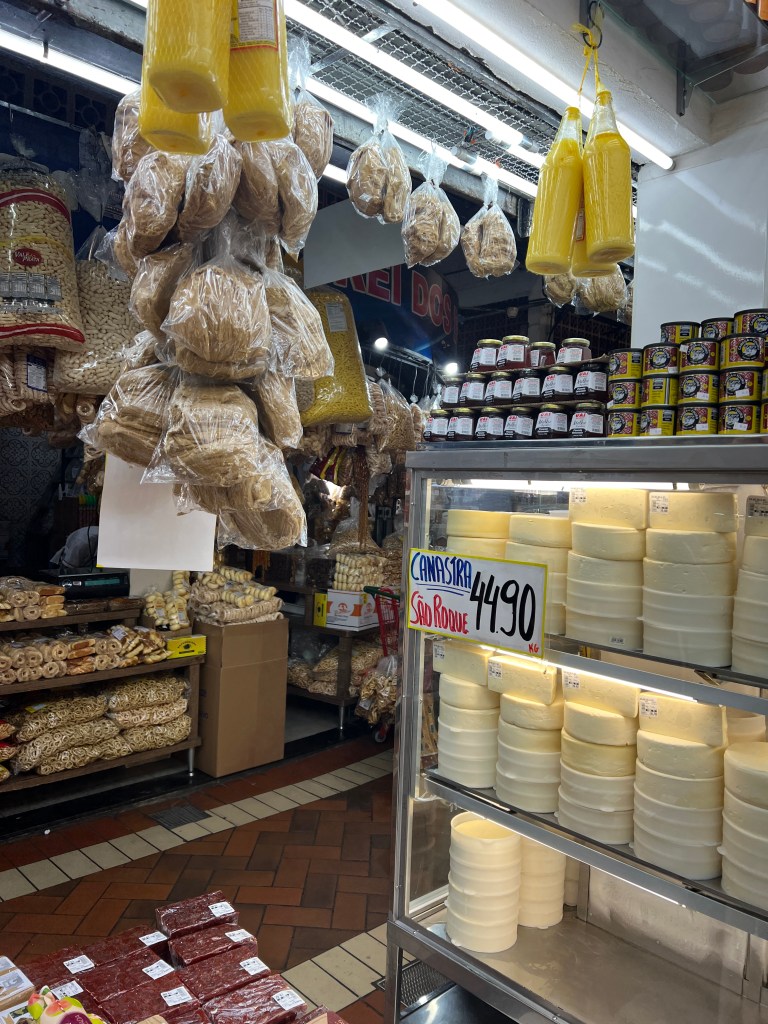
Which brings us back to rhubarb. When trying to find the right cheese to pair with the pink stalks spilling out of my tote bag, I only had to go a few stalls over at the farmer’s market. Enter: the Painted Goat. Chèvre, or goat cheese, is the blank canvas of cheeses. Creamy, crumbly, and slightly tangy, it goes well with just about any sweet or savory addition. Add in roasted red peppers, rosemary, and a drizzle of olive oil. Spoon macerated blueberries and a trickle of honey over the top. Goat cheese was meant to be mixed.
Taking inspiration from a previous recipe (the aforementioned manchego linzer cookies) I set out to make a goat cheese cookie dough that could be rolled, cut, and baked before sandwiching a layer of homemade rhubarb jam in between. I found three reference recipes to start: one for a goat-cheese and thyme thumbprint cookie, one for linzer cookies, and one for an easy rhubarb jam.
After reviewing these recipes, I walked away with a few takeaways:
- Multiple sources of dairy – to maximize the cheesy, tangy flavor in the cookie, I decided to incorporate both chèvre and creme fraiche.
- Reduced sugar – adding enough sugar for texture was critical, but I didn’t want it to overpower the flavor of the goat cheese.
- Increased flour, no rising agents – to ensure the cookies held their shape after rolling and cutting, I bumped up the flour volume slightly to compensate against the high volume of cheese and other wet dairy ingredients and eliminated any rising agents (e.g. baking powder or soda).
- Mixing in a high density flour – yielding a similar effect as the increased volume of flour, I mixed and matched all-purpose flour with buckwheat flour for increased density and an additional nutty flavor profile.
With this in mind, I wrote out a trial recipe for Goat Cheese Buckwheat Linzer Cookies with Rhubarb Jam and got to work.
Developing a recipe is always a bit of a gamble (read my thoughts on this here). Oftentimes you find yourself improvising without any line of sight into the impact until you reach the point of no return. This recipe was no exception.
First, I made rhubarb jam. Typically, when people make jam, they are preparing it in large batches to be canned and distributed as gifts or saved for a rainy (or more often wintery) day. In this instance, however, I had only bought a pound of rhubarb and knew the recipe itself would only require a few tablespoons. This required a reworking of the ingredient ratios. Additionally, the recipe I used called for powdered pectin which was measured in “packets” and no other discernible metric like grams or ounces. I only had liquid pectin on hand, so I immediately found myself off book.
As with most recipe development experiences, I waffled between overconfidence and second guessing. At first, I confidently added all the ingredients, sugar, diced rhubarb, and lemon juice, into a bowl only to re-read the recipe and discover that the recipe instructed you to add the sugar later in the cooking process. Later, as I boiled the jam and saw the strings of the rhubarb clumping together (rhubarb is an extremely fibrous plant), I made a note to break out the immersion blender to ensure a smooth consistency that would easily spread on a cookie. But, I found, after some time, the fibers disintegrated by the heat alone and I was left with a smooth jelly. My renewed conviction was quickly shot again, however, when I poured the final jam into a jar and it streamed in, liquid. Would it set? Only time (and refrigeration) would tell.
The cookie dough was its own tale of “will it work?”. The dough came together easily and the final aroma was decidedly cheesy. Confidence level: high. However, when I started to roll out the dough, I realized it was very soft and pliable. I found myself frequently putting the dough into the freezer at various stages to try to ensure perfect, consistent circular cutouts. After the first batch went into the oven, I panicked and added more flour to the rest of the dough, certain that the original batch would melt into one sheet-tray-sized blob. Confidence level: very low.
However, when the timer rang and I pulled the batch out of the oven, I was greeted with the smell of warm, toasted goat cheese and perfectly spherical cookies. Unlike in the manchego linzer cookie disaster (again, see recipe recap here), these cookies held their shape when cooled and easily sandwiched together with the rhubarb jam (which at this point, had thankfully set to a gelatinous state).
However, when I took the first bite, I knew something wasn’t quite right. The goat cheese, while prominently featured in the aroma of the baked cookie, was lost when it came to the flavor. The result was more sweet than savory. I wondered if I needed to go back to the drawing board. Confidence level: low.
Could I add more goat cheese to the dough? Not without rethinking the ratios. Perhaps the buckwheat flour was getting in the way? Once again, removing would require rethinking the ratios. Plus, I felt the buckwheat flour added a lovely color and nuttiness to the final cookie.
The other aspect I was let down by was the final look of the cookie. The rhubarb jam got a little lost next to the dark bluish hue of the buckwheat cookie. It needed more contrast – similar to the look of a traditional linzer cookie where the top cookie is dusted with powdered sugar so that the colored jelly in the middle stands out like a jewel.
Then I recalled an ingredient I had seen in passing that would allow me to fix both of my problems in one fell swoop: powdered goat milk.
Powdered goat milk is dehydrated goat milk – the benefits include a longer shelf life compared to its fresh counterpart and flexibility when it comes to addition in recipes: either add the dry ingredient for concentrated flavor or simply rehydrate the powder with water and use from there. For my cookies, I had the perfect application.
In lieu of a powdered sugar coating like you’d see on a traditional linzer cookie, I decided to dust the buckwheat cookies with powdered goat milk. The result: an additional tangy pop of flavor to counterbalance the sour-sweet rhubarb jam, and a dramatic contrast in color to push these cookies into show-stopper territory. Confidence level: high.
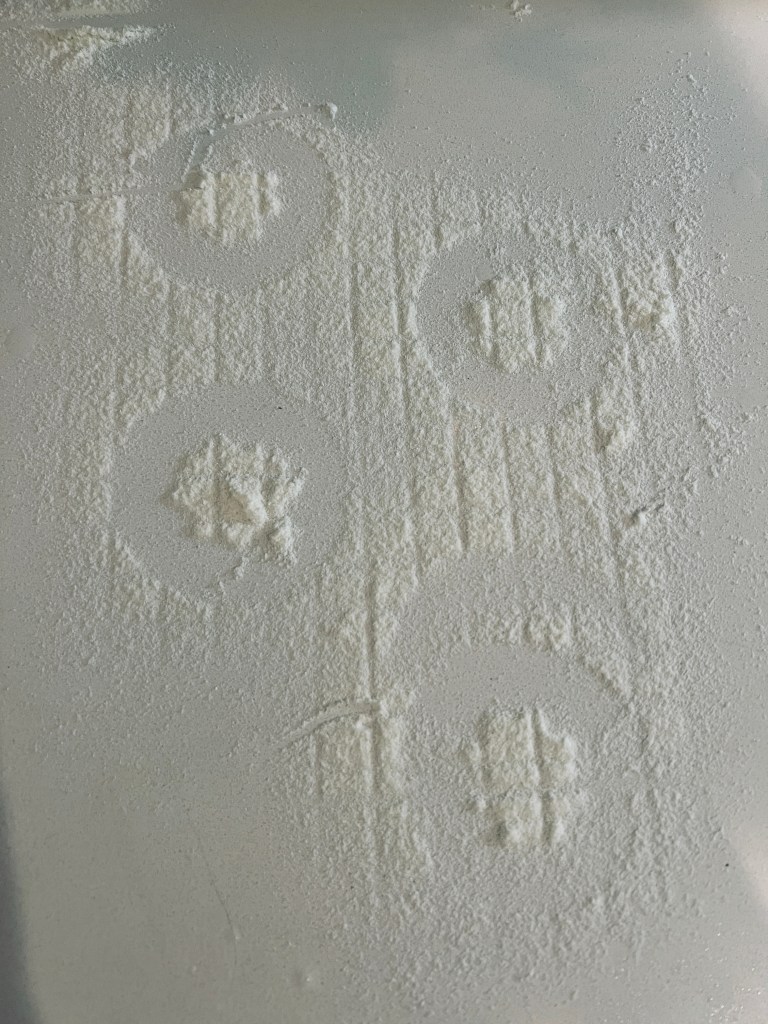
In spite of landing on a high note, I still waffled on whether or not to share the recipe as part of this recap. The amount of highs and lows of this recipe upon first try made me wonder if it would be worth trying again with some more modifications. What if I added powdered goat milk directly to the cookies too? Should I play with the ratio of buckwheat flour to help amp up the goat cheese flavor even more? Was the rhubarb jam too sweet?
After some consideration, I’ve decided to share my WIP recipe below. There’s room for improvement, or rather, room for improvisation. Room to try it out and make it your own. With that said, I do have it on authority (friends, family, and a large number of my partner’s coworkers) that the version below is pretty darn good all on its own.
With that said, if I see rhubarb again this summer, I’ll probably just be making a rhubarb pie.
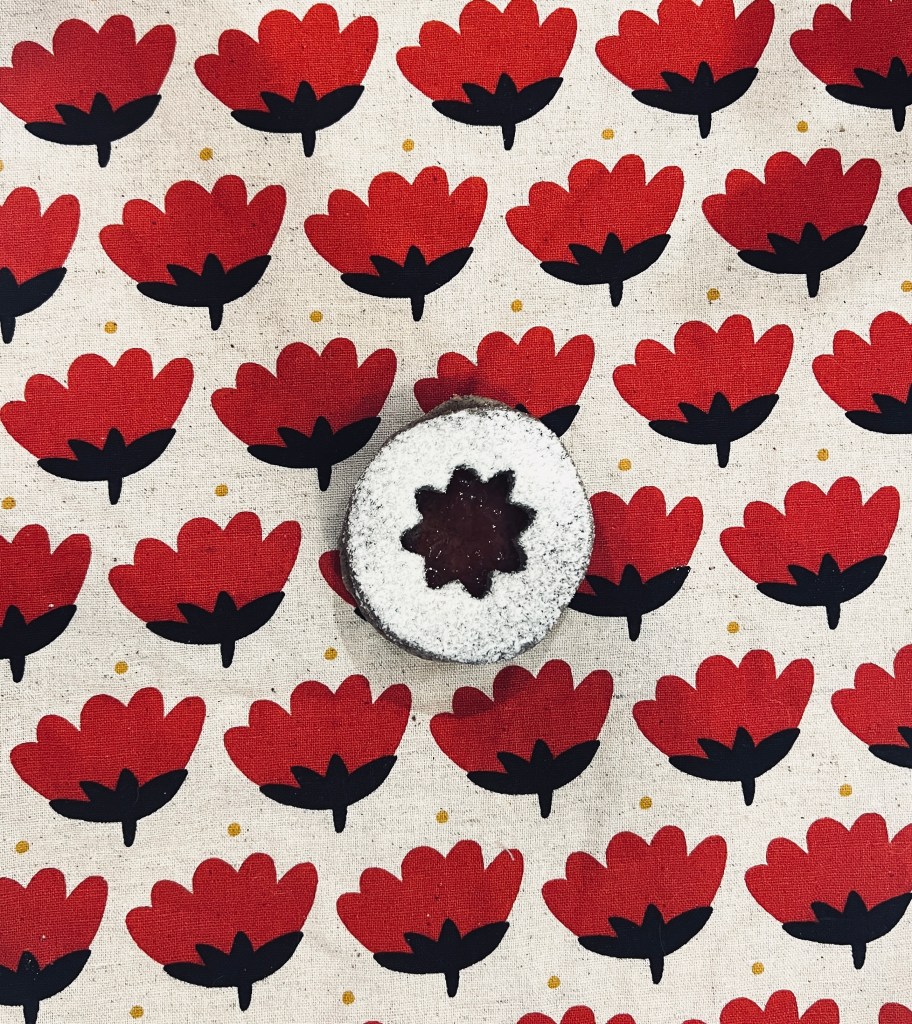
| savory-ness (1-5) | 3 – slightly cheesy, but the jam is more sweet than sour |
| weird or works? (complimentary flavors or a little bit weird?) | works! |
| savory ingredients highlights | chèvre + crème fraîche + goat milk powder + buckwheat flour |
| best served… | when you have more rhubarb than you know what to do with |
| encore? | jam right! |
Goat Cheese Buckwheat Linzer Cookies with Rhubarb Jam
Try saying that five times fast! These cookies are a savory take on the traditional Linzer cookie – sweet and slightly sour rhubarb jam is sandwiched between two cheesy, nutty cookies made with goat cheese and crème fraiche. Buckwheat flour gives these cookies a distinctive blue-gray hue, and a dusting of powdered goat milk brings a pop of added tang.
Makes 12 cookies
Kitchen Equipment
- Stand mixer or hand-mixer – while you can definitely cream butter and sugar by hand, a stand mixer or hand mixer will make it that much faster!
- Rolling pin – baking hack: roll your dough out between two sheets of parchment paper to prevent any dough from sticking to your rolling pin, no extra flour needed!
- Cookie cutters – recommend a large cookie cutter and a small cookie cutter to create a window in half of your cookies for the jam to peek out through.
Ingredients
Rhubarb Jam
- 1 pound rhubarb, diced
- ¾ pound granulated sugar
- Juice of 1 lemon
- Liquid or powdered pectin (¼ pouch)
Goat Cheese Buckwheat Cookies
- 1 stick butter, room temperature
- 2 oz goat cheese
- 1/4 cup sugar
- 1/4 cup creme fraiche
- 1/2 cup buckwheat flour (85g)
- 3/4 cup AP flour (128g)
- 1 tsp Kosher Salt
- Zest of 1 lemon
- Powdered goat milk (for dusting)
Instructions
For the rhubarb jam:
- Put a metal spoon in the freezer.
- Add the rhubarb, sugar, and lemon juice to a sauce pan and cook over medium-high for 10 minutes.
- After 10 minutes, add ¼ pouch of pectin (powdered or liquid). Boil the jam for an additional 25-30 minutes. By this point, the fibers in the rhubarb should be completely broken down and you will be left with a smooth consistency jam.
- To test the consistency of the jam, take the spoon out of the freezer and put a little bit of jam on the spoon. If it congeals, the jam should be ready. If not, continue cooking the jam.
- Once the jam is ready, pour into a clean jar. Put on a lid and keep the jam in the fridge until set.
For the cookies:
- Preheat the oven to 350ºF. Using your fingers, incorporate the zest of one lemon into the sugar.
- Combine the butter and goat cheese in a stand mixer using the paddle attachment. Once combined, add the sugar and beat until creamed (~30 seconds). Finally, add the creme fraiche and mix until combined.
- Whisk together the flours and salt in a bowl. Add the dry ingredients to the wet ingredients and mix until incorporated. Shape the dough into a disk, wrap it in plastic wrap or beeswax wrap and refrigerate for 30 minutes.
- Using a rolling pin, roll out the dough between two sheets of parchment paper on a sheet tray until the dough is ⅛ inch thick. Using the large cookie cutter, cut out as many cookies as you can. For half of the cookies, use a smaller cookie cutter to cut a window in the middle of the cookie. Repeat with the remaining dough scraps. The dough will get soft easily, so if it becomes difficult to work with, put the sheet tray into the freezer for a few minutes and continue, repeating as necessary.
- Bake the cookies at 350ºF for 15-16 minutes, until the edges are lightly golden. Let the cookies cool on the sheet tray for 20 minutes, then move to a cooling rack.
For assembly:
- Dust the cookies that have a hole in the middle with powdered goat milk.
- Take the un-dusted cookies, flip them upside down, and using an offset spatula, spread 1 tablespoon of rhubarb jam on the cookie.
- Take a dusted cookie and place it on top of the jam covered cookie. Savor and enjoy!

 Savor Tooth Snacks
Leave a reply to white cheddar guava shortbread – Savor Tooth Snacks Cancel reply