
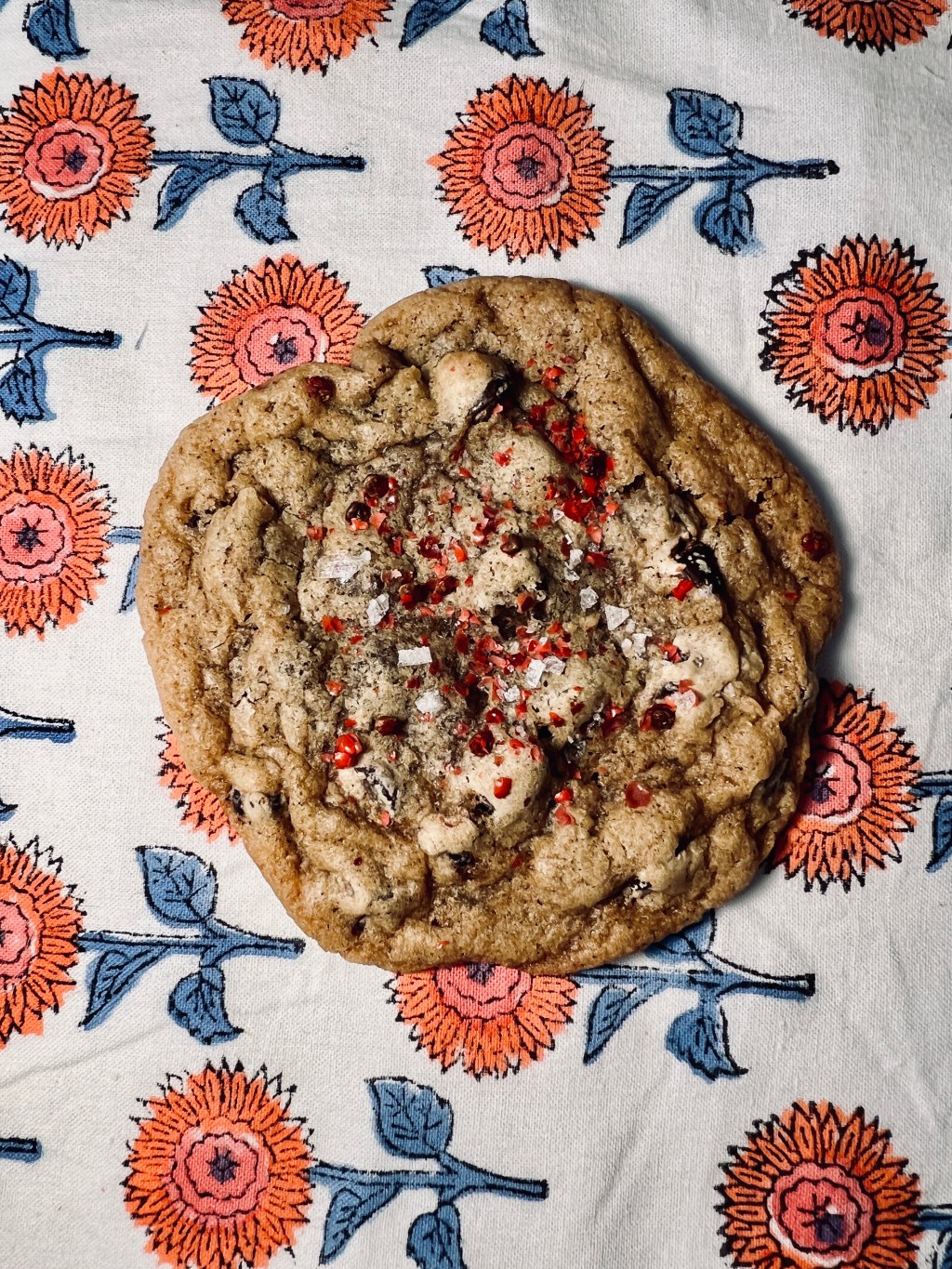
The chocolate chip cookie is the cookie archetype. Originally created by Toll House Inn owner and baking legend Ruth Graves Wakefield in 1938, the chocolate chip cookie (or as she called it, the Toll House Crunch Cookie) became an instant classic. Today, it’s what comes up when you type “cookie” into the emoji keyboard. It’s Cookie Monster’s favorite cookie. Cookie Crisp cereal is basically mini chocolate chip cookies. The chocolate chip cookie is iconic. But, like most classics, it is also frequently the subject of recreation, riffs and re-invention.
Enter: Abi Balingit’s Adobo Chocolate Chip Cookies. Fresh from her cookbook, Mayumu, these cookies merge an American classic with a Filipino classic: chicken adobo. Chicken adobo is a chicken stew and, for many, the unofficial dish of the Philippines. The term “adobo” references the use of cooking meat in vinegar and soy sauce as a mode of preservation. The dish also includes spices like bay leaves, garlic, and black peppercorns.
Balingit takes the core ingredients that make adobo, adobo, and incorporates them into a chocolate chip cookie for a savory spin:
- Soy sauce – inspired by the use of miso in many savory-sweet applications, Balingit uses soy sauce as the primary salt vehicle in this recipe.
- Bay leaves – commonplace in many savory applications from stews to sauces, bay leaves are meant to be steeped and then removed after imparting their flavor.
- Vinegar – in chicken adobo, vinegar plays a role as a preservative, helping to elongate the shelf life of the meat when marinated and cooked in it. In baking applications, however, vinegar can also play a role as an activator for rising agents like baking soda. For this recipe, Balingit recommends apple cider vinegar.
- Pink peppercorns – in spite of the name, pink peppercorns are not actually related to black peppercorns. The term is used to refer to the dried berries of three different plants: the Baies rose plant, the Peruvian peppertree, or the Brazilian pepper. At this juncture, I couldn’t tell you which of the three I purchased, but they all look and taste quite similar: milder than black pepper with a slightly fruity note.
This recipe also leverages browned butter to introduce a deeper, nuttier profile to the final cookie and an overnight rest to help the flavors develop even further. The final result is subtle, complex, and extremely well-balanced. When you bite into the cookie, it gives butterscotch and caramel and the slightest herbal aftertaste from the bay leaves, almost like a hint of oregano or thyme. You can’t pinpoint the soy sauce or vinegar, but you can tell there is something salty and slightly funky in the mix. Rich dark chocolate is studded throughout and adds a bitter note.
All of this is countered by the bright peppercorns and flaky salt on top.
Each cookie is beautifully rippled from the act of smashing the cookie sheet on the counter right as they come out of the oven, deflating the rising treats and leaving valleys and crevices galore. The textures are just as diverse as the flavors: chewy cookie, melty chocolate, slightly crisp edges with a crunch from the peppercorns and salt crystals on top.
Eating these cookies also provided a multifaceted experience. This was my first time trying pink peppercorn and also my first time having bay leaves in a dessert context. However, all this newness was offset by the intense familiarity that comes with eating a chocolate chip cookie – that iconic, classic cookie that surfaces childhood memories for so many.
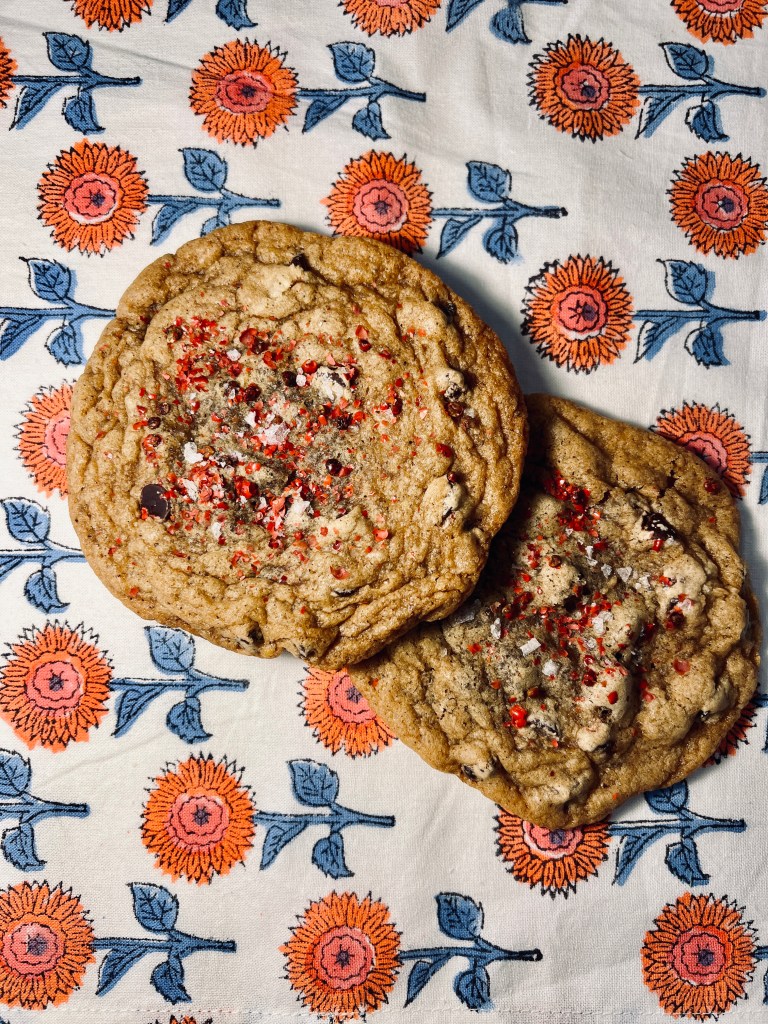
For the recipe’s author, I can imagine the experience of eating this cookie provided a double dose of nostalgia. Abi Balingit recalls chicken adobo being a staple meal in her household growing up – a comforting and delicious dish that could be whipped up on the regular. By combining those flavors with an all-American representation of the feeling of being at home (there is a reason why realtors bake cookies at open houses), she creates the ultimate sensory memory device.
Having not grown up enjoying chicken adobo, this was not my experience. However, I feel like most can relate to the act of enjoying a meal that sends you back in time and allows you to reminisce. For me, that dish would be mole.
Mole is a traditional Mexican sauce made with fruits, nuts, chili peppers, and spices. The variations are endless, but the one I grew up eating and am most familiar with is Mole Poblano. Dark-red in color, this mole includes a high proportion of chilies, including ancho and guajillo, along with sesame seeds, pepitas, and spices like star anise. Chocolate and raisins are added for additional depth and sweetness. The sauce can be served over your choice of protein – for me, growing up, it was always served over chicken – and alongside a warm flour tortilla and a bed of Mexican rice.
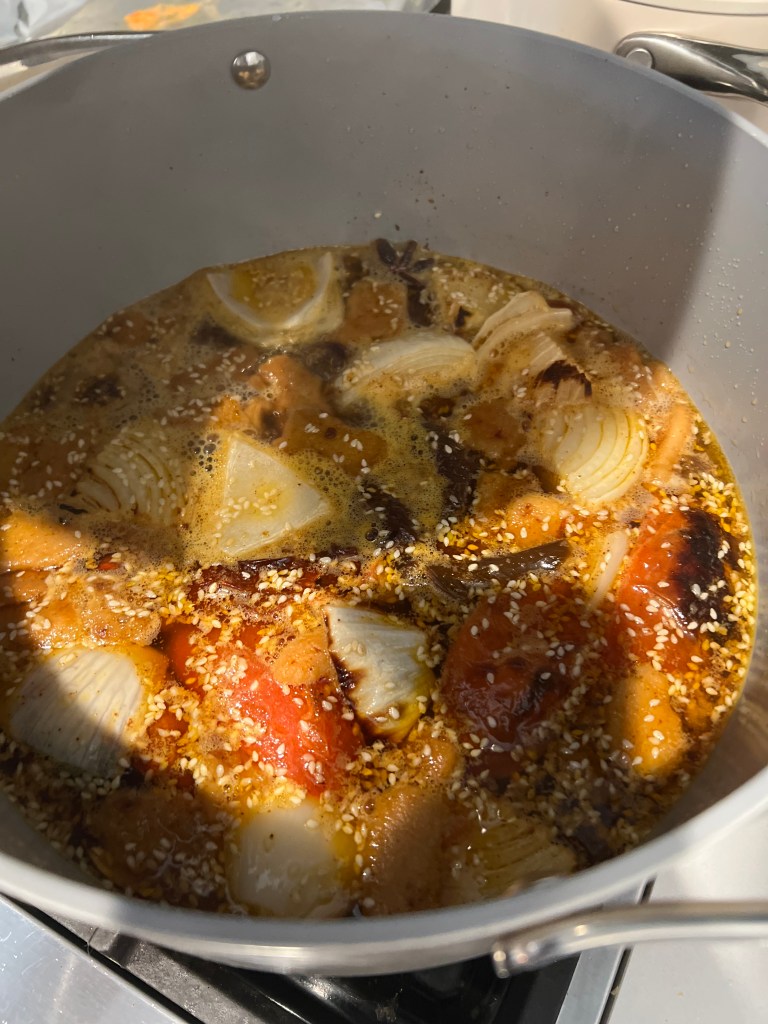
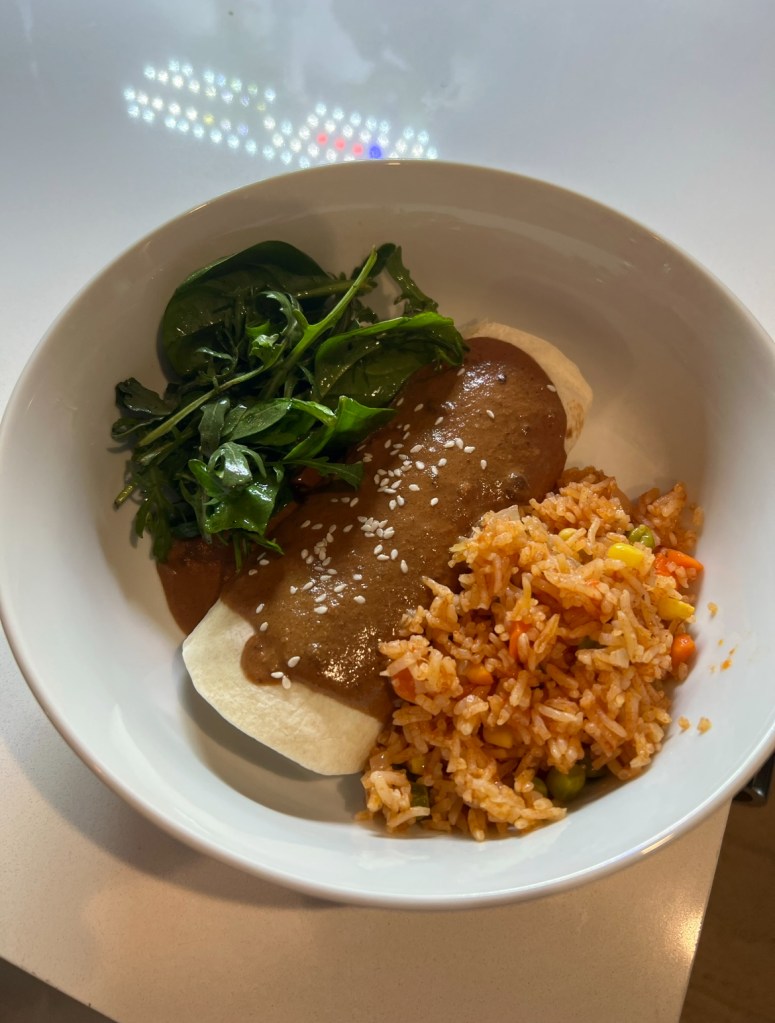
Recipes for mole vary substantially – everyone has their own version with different spice combinations and different ratios of the various ingredients. Traditionally, mole is an intensive effort that requires a long ingredient list and patience to develop a layered sauce with depth and dimension. My mother, however, found a way to make mole a staple meal in our household – a comforting and delicious dish that could be whipped up on the regular. Her secret? Mole paste.
Mole paste is a pre-prepared, concentrated version of mole that is rehydrated with the addition of broth. The most common mole paste on the market, and the one I grew up with, is Doña Maria Mole Sauce (no specification as to the type of mole, but it’s a classic Poblano). For those that aren’t familiar, this particular brand of mole paste comes in an incredibly distinctive glass jar that is wider at the top and tapers slightly at the bottom. It resembles a tiny drinking glass and is sealed with a stamped metal lid that you have to carefully pry off to avoid spilling the layer of oil that sits at the top.
My mother, like many home chefs, would use this paste as a starting point and then doctor it to her liking. Depending on what she had on hand, she would add some combination of chocolate (always Abuelita), tahini, peanut butter, salt, and sugar. The whole thing came together in less than 30 minutes thanks to another quick-dinner hack: grocery store rotisserie chicken. I have fond memories of sopping up the leftover mole with thick white flour tortillas and mixing it with the rice to create the perfect bite. The mole was sweet and salty, not too spicy and just a little bitter. I think a big part of the appeal as a kid with a major sweet tooth was that I got to eat chocolate for dinner.
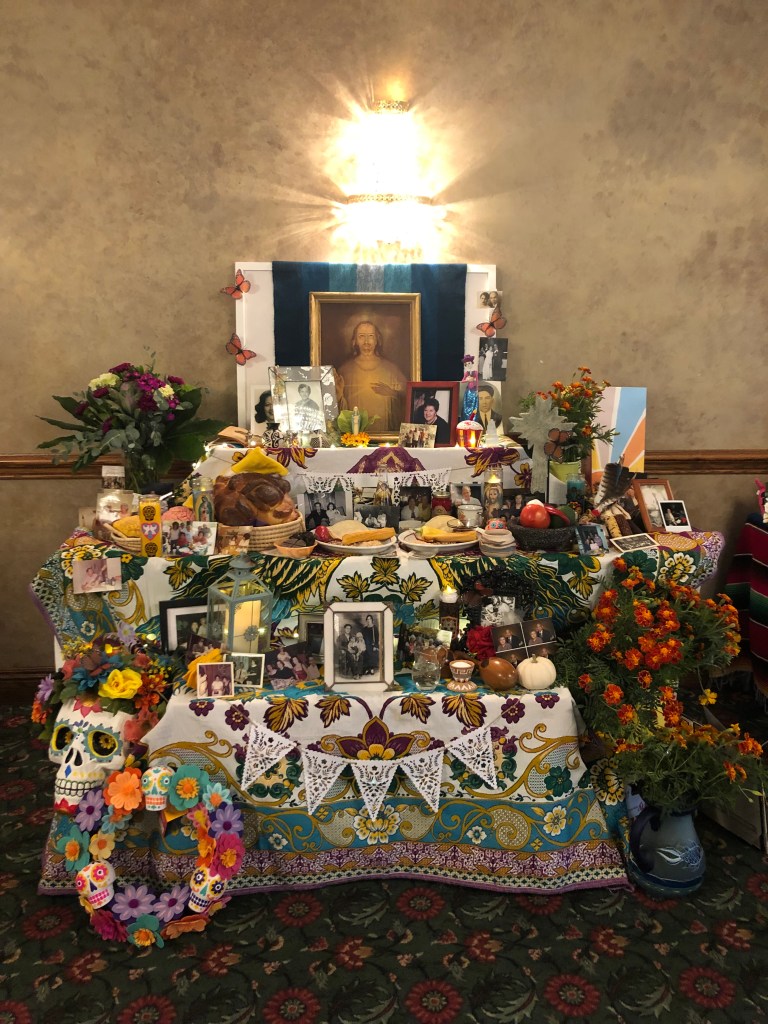
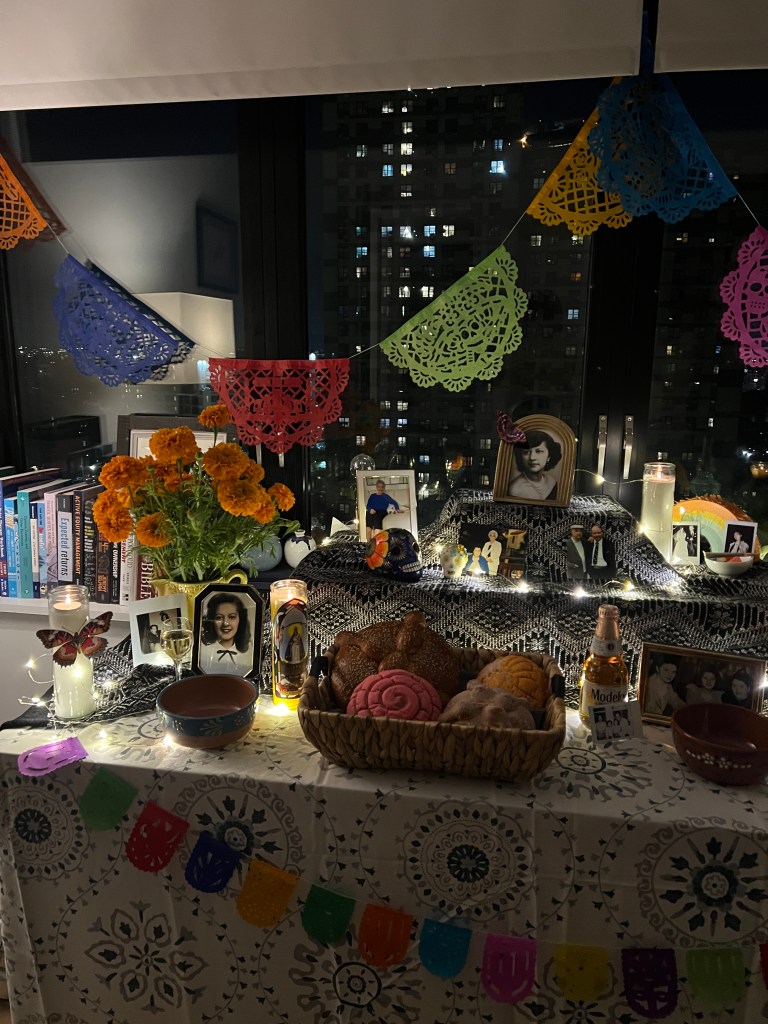
Since then, mole has become more than just a dish that reminds me fondly of my childhood. It has helped me feel more connected with my Mexican heritage and with my grandmother who passed away 4 years ago. Since her passing, every year I celebrate Día de los Muertos by making mole. Though I have a soft spot in my heart for the doctored mole paste version I grew up with, I’ve challenged myself to make it from scratch (albeit using Rick Martinez’s recipe for Mole Sencillo which has a simplified list of ingredients and easy-to-follow instructions, baby steps). I host a dinner with my partner and close friends and set aside a small portion for my ofrenda, a traditional altar where you display photos of your loved ones who have passed away to celebrate their lives and memory.
This past year, I created my biggest ofrenda yet and hosted a Día de los Muertos party. I served guacamole and tres leches cake and chicken mole empanadas (a more party-friendly way to incorporate mole which is typically a sit-down meal). Everyone raved about the mole empanadas – all the leftovers were carried home in napkins and re-used take-out containers. It felt incredibly special to share this part of myself – my favorite childhood meal, my heritage, my fond memories of my grandmother. It was incredibly moving for friends to add their own photos of loved ones now gone to the ofrenda and to hear their stories, celebrate their memories.
Food, memory, and culture are all intertwined. Because the experience of eating and enjoying food is multi-sensory in nature (smell, taste, sight, and texture), it can act as an anchor and help us remember where we came from and where we’ve been. It can become a bridge to learn about new cultures or to better understand your own.
Making Balingit’s Adobo Chocolate Chip Cookies inspired me. It made me want to try chicken adobo for myself, to identify those core ingredients in each bite and map them to what I tasted in the cookie. It inspired me to reflect on meals that bring me back to my roots and the deeper meaning that a dish can hold, for a person, or for an entire culture. It inspired me to try to create something that can instill a double dose of nostalgia for myself and those I love. And while I can’t promise anything yet, there might be a mole-inspired cookie on the horizon soon. Stay tuned.
| savory-ness (1-5) | 3 – salt + peppercorns bring a savory kick |
| weird or works? (complimentary flavors or a little bit weird?) | works! |
| savory ingredients highlights | soy sauce + vinegar + bay leaves + pink peppercorns |
| best served… | when you are feeling homesick |
| encore? | pink peppercorn club! |

 Savor Tooth Snacks
Leave a reply to savory shortbread cookies with olives and rosemary from new york times cooking – Savor Tooth Snacks Cancel reply