
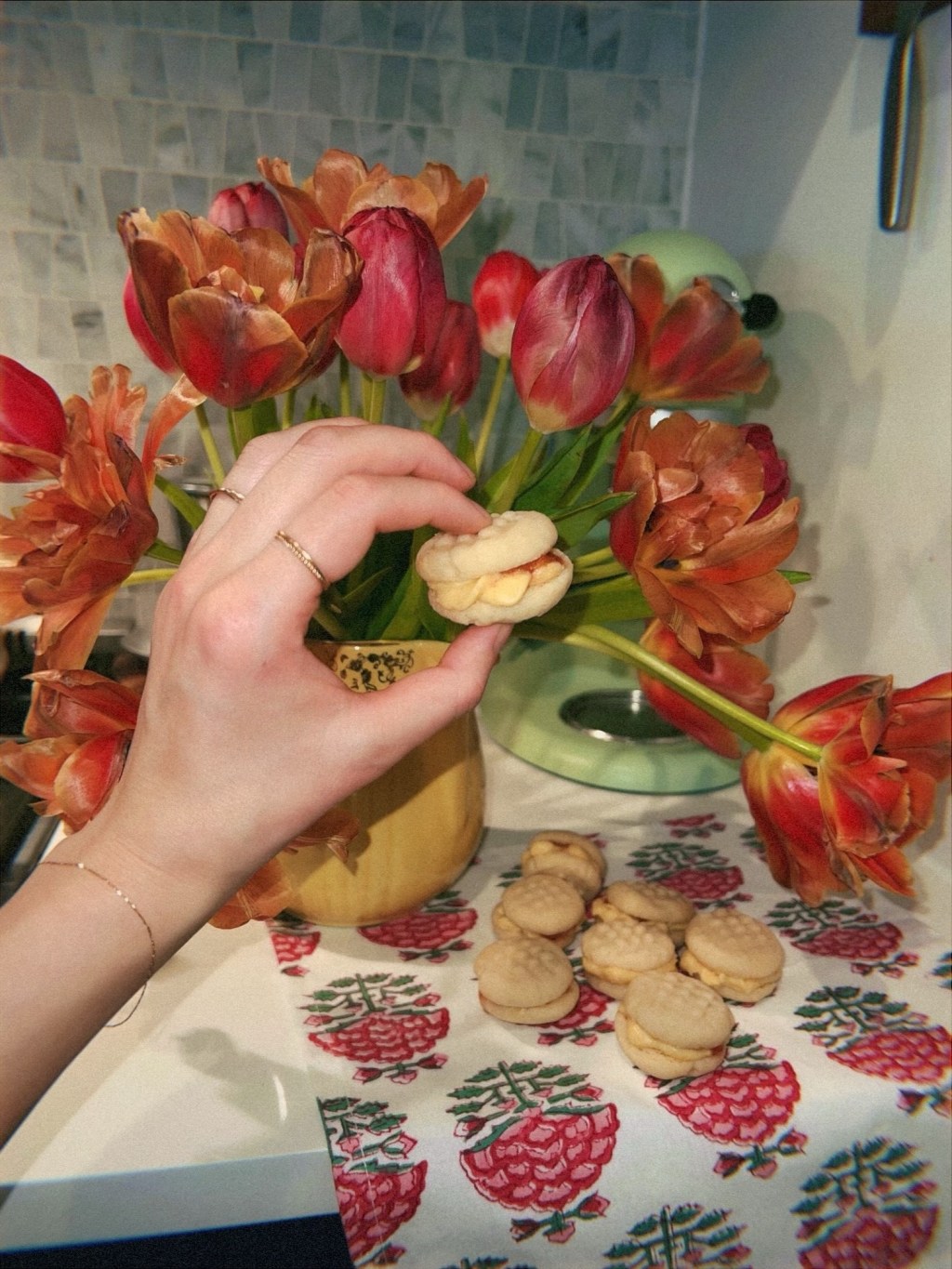
When starting this project, there was one aspect that left me feeling simultaneously sooo excited and also incredibly anxious: the prospect of developing my own recipes. While I have been known to make the odd tweak to a recipe here and there, I usually stick to the realm of substitutions: strawberries instead of blueberries, almond extract instead of vanilla, almond milk instead of cow’s milk, that sort of thing. In those instances, however, I am still abiding by the outlined ratios, ingredients and steps for preparation. There have been a few times where I’ve strayed further – for example trying to make a lemon bar crust out of ground up shortbread cookies or attempting to merge two tart recipes: frangipane and rhubarb. In those instances, while I go in with confidence, the moment something unexpected happens (read: disaster strikes) I realize I’m in uncharted territory and I ask myself if maybe I would have been better off with a recipe in hand. With that being said, there have also been instances where I follow a recipe and still find myself wondering what went wrong. Such is life.
What I had never done before this project, however, was to try to develop a recipe from scratch – ingredients, ratios, process, the whole nine yards. Why not? Well, for one, I actually find the process of following a recipe quite meditative. Much of my day-to-day feels like a constant exercise in mental gymnastics: tetris-ing a busy schedule, trying to reach the end of a seemingly endless to-do-list, working a job where uncertainty and ambiguity come with the territory. Following a recipe provides a reprieve from all that. It’s an opportunity to turn part of my brain off and trust in the process, confident that if I do as I’m told, I will be rewarded with something delicious.
I think another reason why I haven’t attempted recipe development before is because it’s intimidating. There’s no playbook on recipe development and so much of it is trial and error — even for the professionals. Recipe development is less of a black-box than ever before with publications like Bon Appetit creating content that shows what happens behind the scenes, like I Baked 192 Lemon Bars to Create the Perfect Recipe (alternative title “Developing These Perfect Lemon Bars Nearly Broke Me). Chefs like J Kenji López-Alt have turned the kitchen into a laboratory, going to extreme lengths to show the impact changing just one ingredient or a single variable like temperature or time can have on the final product.
But, while trial-and-error is a tried and true method, particularly if you are following the scientific method, as an amateur home baker with a full time job and other responsibilities, I have neither the time nor the $$$ to make a single recipe dozens of times in order to get it just right. So what is a girl to do?
I think the answer lies somewhere in the middle, a happy medium between the humble riff and the change-every-variable-one-by-one approach:
My Blueprint for Recipe Development*
Step 1: Come up with a vision. Write down the flavors you want to highlight. Describe the texture(s) you are going for. Decide on a format (a cookie, perhaps). Draw a picture of what you think the final product will look like.
Step 2: Research. Find some existing recipes that can act as a baseline. Find multiple so you can see what they have in common and where they differ — this can help you infer the impact those differences will have in the final result. For example, if one recipe uses granulated sugar and the other uses brown sugar but otherwise are very similar, you can infer the effect of using one ingredient versus the other.
Step 3: Decide what you want to change. Try to figure out what impact each change might have and differentiate between high-risk changes and low-risk changes (aka riffs). For example swapping vanilla extract for almond is low-risk — you know what the outcome will be and it won’t end in disaster. Changing ratios or methodology or introducing new ingredients altogether, however, are high-risk. These are changes that could make or break your recipe and it’s important to do some due-diligence on what this change could do. There could be cascading implications (e.g. if you change x, you need to also change y). This is a great opportunity to conduct a quick Google search “what happens if I change x in a recipe?”
Minimizing the number of high-risk changes will help minimize the amount of trial and error you find yourself up against.
Step 4: Bake in small batches. Halve your recipe in case it fails – this will cut down on cost and food waste. If you are experimenting with different temperatures or time intervals for baking, only bake a few items at a time so you can see what the result is before you bake everything.
Step 5: Write it down. I love spreadsheets for side-by-side comparison between recipes and a handy-dandy notebook will allow you to sketch and jot down notes as you go.
Step 6: Be flexible. Things might not work out as you initially envisioned, but you may encounter unexpected successes along the way. It’s okay to follow those and revise your original vision accordingly.
*Disclaimer: Just like following a recipe doesn’t always mean you will be rewarded with a delicious treat, following this process doesn’t guarantee your recipe development journey will be a success. It might, however, increase your odds.
As someone who is very framework and process-oriented, having this blueprint has helped me dip my toe into the world of recipe development. First, with my endeavor to create my partner’s dream cookie. Most recently, in my attempt to incorporate salted duck yolk into a cookie.
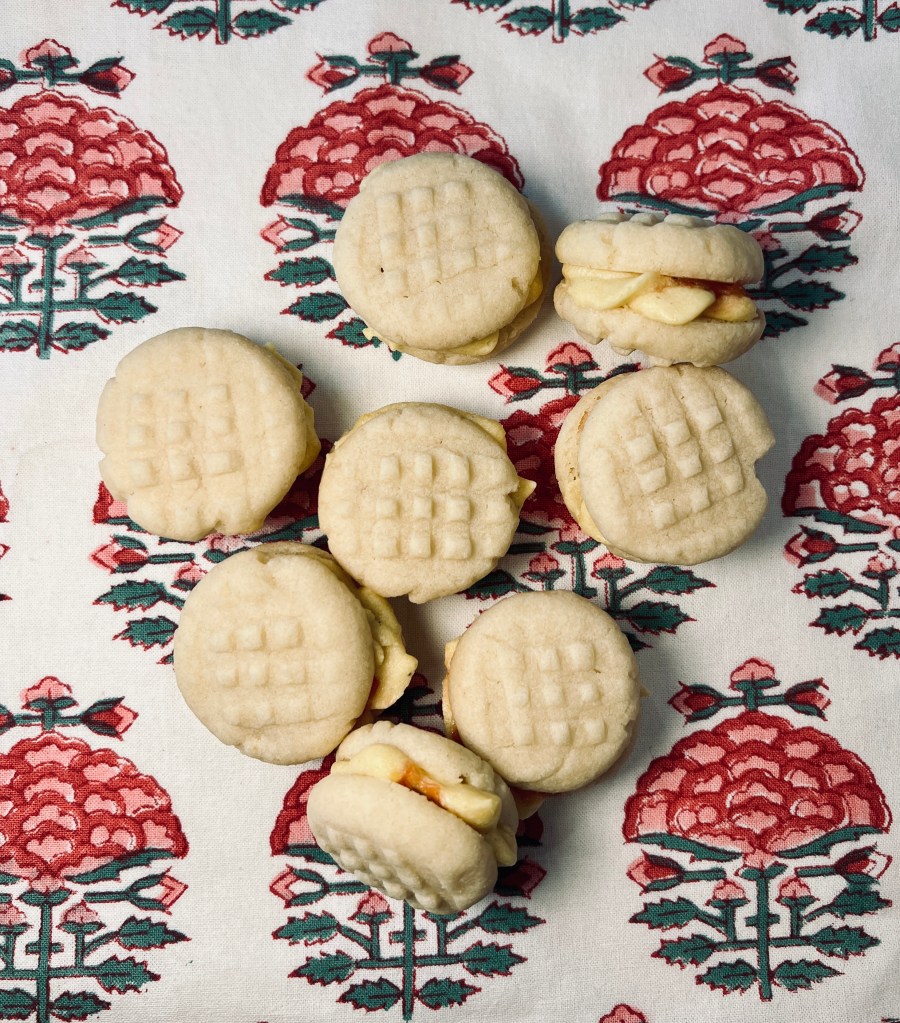
When developing both recipes, I went in with one vision and walked out with something completely different. Version 1 of the dream cookie involved animal crackers and kettle corn — the final batch was an oatmeal cookie studded with maple pecan toffee. For the salted duck yolk cookies, my initial vision was an almond thumbprint cookie filled with salted duck egg yolk custard and guava jam. Two batches of custard later and a number of trial bakes where the custard overflowed out of the thumbprint cookies, I pivoted to my back-up plan: sandwich cookies.

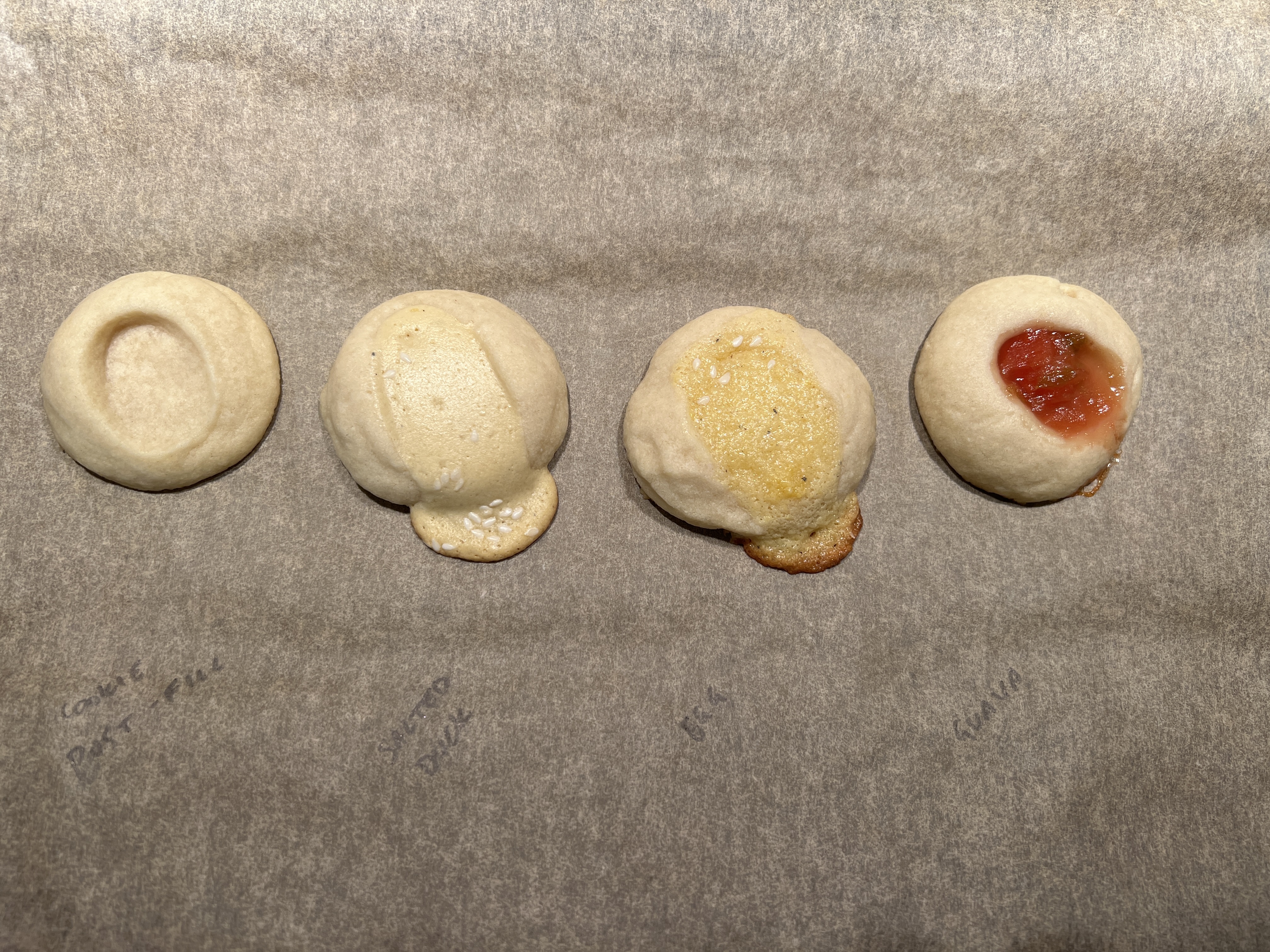
Neither end-point was necessarily bad, but when I talk about both of these recipe development experiences, I waffle. People liked the cookies, but they weren’t exactly what I envisioned. The flavors worked well together, but the texture had room for improvement. I’d definitely make them again, but there are things I’d do differently.
I think it will take some time before I feel more confident in my original creations (and probably even more time before I decide to share them here for others to try themselves). However, the fact that I was able to pivot from my initial failures and persevere is a point of pride. It’s proof of personal growth and resilience. As one of my favorite Peloton instructors says, it was a First Attempt In Learning. The best part? I’m not afraid to try again. I have so many ideas for new recipes, and I know that the more I keep at it, the higher my chances of success will be.

 Savor Tooth Snacks
Leave a reply to basil parmesan checkerboard cookies aka pesto shortbread – Savor Tooth Snacks Cancel reply