
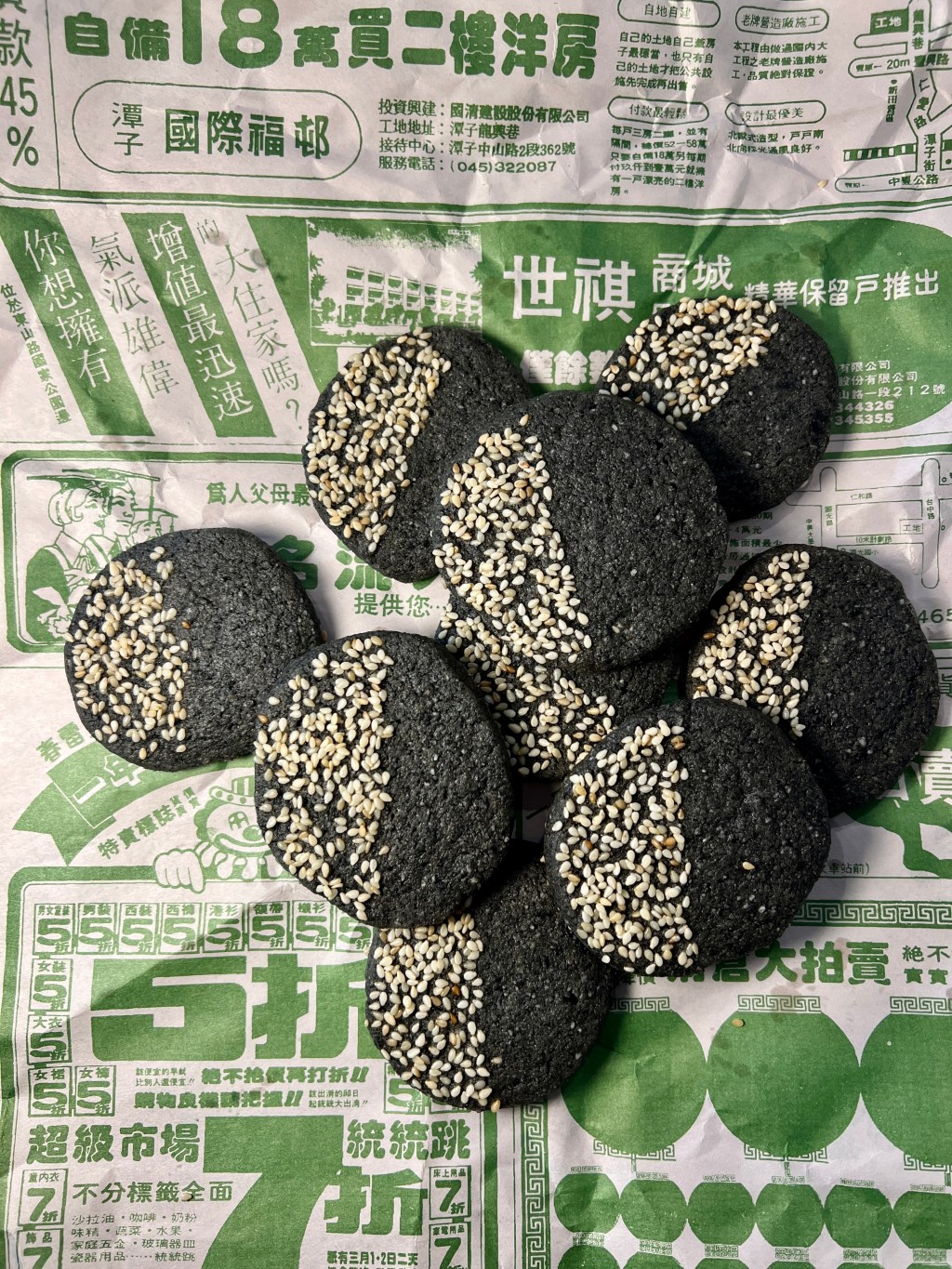
This year, Lunar New Year kicked off on February 10th, ringing in the Year of the Dragon. In celebration, I wanted to make a cookie that incorporated flavors found in traditional Lunar New Year dishes. I settled on an old favorite: black sesame, specifically Genevieve Ko’s Black Sesame Shortbread from New York Times Cooking.
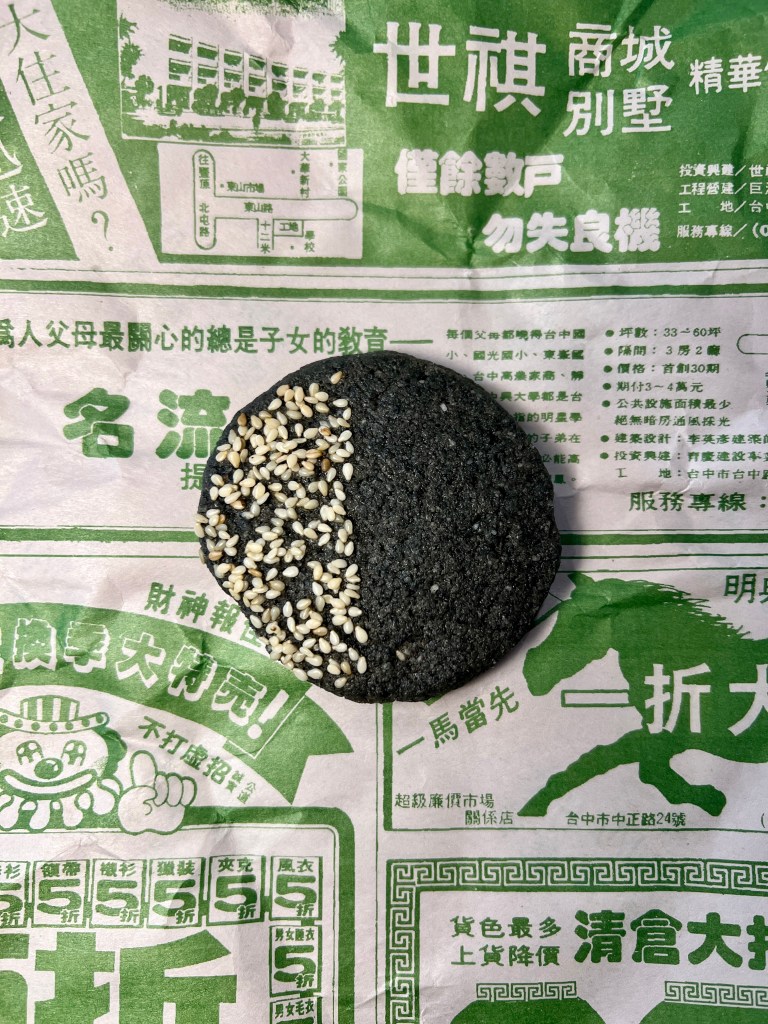
I’ve actually made these cookies once before, and they definitely fit the bill for a savory cookie: toasted black sesame lends a deep nutty flavor and a stunning charcoal gray shade that contrasts beautifully with the white sesame seeds on top. The recipe includes the perfect amount of salt, resulting in a cookie that is not too sweet and dangerously addictive.
Black sesame is one of the primary ingredients in tang yuan, a Chinese dessert featuring sweet glutinous rice balls filled with a paste of black sesame and peanuts. Because its name is a homophone for the Chinese word for “union”, it is often enjoyed around holidays like Lunar New Year as a symbol of togetherness.
Like most recipes, this was a lot easier to make the second or third time around. Practice, after all, makes perfect. From my previous times making these cookies, I knew common pitfalls to look out for:
- Make sure the black sesame seeds aren’t rancid – they should smell nutty and fresh; one of my first times making this, I ended up tossing the mixture part-way through because the black sesame seeds I was using gave off a plastic-like smell.
- If you can’t find pre-toasted black sesame seeds, smell them closely as you toast – you can’t rely on color to determine when they are properly toasted so make sure they don’t burn!
- Make sure you process the final dough enough so that it holds together – if not, you’ll find yourself with a crumbly and overly short dough that will not hold together well when you slice and bake the final cookies
This time around, I walked away with a few additional learnings:
- You can make this without a full-size food processor – when making them with my friend Susie who only had a small blender, we were able to process the dry ingredients first and then incorporate the butter by hand using a pie dough cutter.
- It’s hard to make the cookies perfectly round – even if you rotate as you cut, you may still need to reshape the cookies slightly post-slicing. Next time, I might see if there is a way to store the dough in the fridge so that it doesn’t wind up with a flat edge on the bottom (cookie dough fridge hammock?)
- An offset spatula can help achieve crisp lines with your white sesame sprinkle – while this is certainly up to personal preference, holding an offset spatula over the cookie as you sprinkle the white sesame seeds results in a very clean line and the final cookie looks quite professional.
- In a pinch, the freezer can help cut down on fridge time – if you find yourself not wanting to wait a full hour, 25 min in the freezer is sufficient to solidify the dough pre-slicing.
Overall, making these cookies was a breeze. They come together so fast, the final product looks beautiful and taste-wise, they are a melt-in-your-mouth, go-back-for-thirds, snackable delight. These are the cookies you make when you want to impress but you don’t have time to take on a more advanced baking endeavor.
Black sesame shortbread will forever be a go-to favorite, particularly around this time of year as Lunar New Year dish-pics flood my instagram and pique my inspiration. While I didn’t grow up with a robust Asian community nearby – the extent of my exposure was the lone American-Chinese restaurant in the rural Colorado town I was raised in – I’ve since had the opportunity to live in multiple cities with vibrant Asian culture-centers. These places and the people behind them have opened my eyes to a myriad of cuisines and traditions over the years.
My first dim sum experience was when I lived in Sunnyvale, California post-grad. My house-mates and I had Sunday brunch at New Port Dim Sum and Chinese Food, just down the street from where we lived. I marveled at the operational complexity required to produce the right amount of dumplings, rice noodles, pork buns, turnip cakes, etc. so that everything was readily available on the carts zooming around the dining room. Though I was initially intimidated because I didn’t know the names of all the dishes, I soon realized that much of dim sum ordering is unspoken – pointing to a favorite dish, stamping your order card, flagging down a cart, flipping the tea pot lid upside down when you need a refill.
I ate my fill of shrimp shumai (at the time one of the few things I could eat as a pescaratian – I have since become more of a social omnivore) and saved the remainder of my appetite for dim sum dessert. There were egg lava buns with molten yellow custard spilling out the center and fish-shaped mango pudding that almost looked too perfect to eat. It was here that I discovered my love for jiandui, toasted sesame balls, and soon after attempted to recreate them at home, to moderate success.
Fast-forward to early 2020 in San Francisco, just before the pandemic shutdown. My partner and I ventured into Chinatown in search of tea. We found ourselves at a traditional Chinese tea store called Vital Tea Leaf. We sat down and the man working behind the counter walked us through a tasting of several different varieties of loose-leaf tea, explaining the qualities and health benefits associated with each. Blue People Ginseng Oolong – tropical aromas promoting energy and focus. Jasmine Pearls – delicate floral notes supporting immunity with high levels of antioxidants. Lychee Black – just plain delicious. He walked us through the proper preparation for the tea using a traditional Chinese tea set. First, an initial rinse of the leaves followed by a shorter than expected steep – in some cases as little as 10-15 seconds. Each cup could only hold a few mouthfuls of tea, but the act of sipping it slowly from the little bowls was calming and meditative. We walked away with 5 bags of tea and every intent to return soon to replenish our stash.
In the coming weeks, however, the world began to shut down. Around the same time, my grandmother was diagnosed with brain cancer and fell into a coma after a biopsy. I booked a flight to Ohio, unsure if it was the right thing to do or when I would be returning. The day before I left, my two best friends and my partner threw me a small surprise birthday party. The four of us ate Thai takeout and drank white wine. They all had gifts which I opened in tears, overwhelmed by their love and generosity. The last gift was a traditional Chinese tea set from the very same store my partner and I had ventured into mere weeks before.
A lot of things changed during the pandemic. My grandmother passed away, I moved to my first solo apartment, my partner and I got a dog, we moved across the country to a new city. But throughout all that change, a point of consistency was the simple act of making tea in my traditional Chinese tea set. It provided a necessary pause in an otherwise uncertain and unstable time.
I could go on and on with more examples of my cultural education – making mooncakes from scratch with my mom, buying my partner a wok for Christmas and learning how to prepare mapo tofu and fried rice, many many trips to Pineapple King Bakery and my refusal to ever attempt to make pineapple buns myself as I know they just won’t be the same…
The list goes on and on. I’ve even found myself in the fortunate position of being able to share these experiences with others – my younger sister came to visit me in NYC last year and one of her top requests was going to dim sum in Chinatown. Looking back on it, I can hardly believe that only five years before, I was trying dim sum for the very first time.
I do want to acknowledge that the experiences shared above are specific to Chinese culture. Many other Asian communities, however, also celebrate Lunar New Year including South Korea, Vietnam, Malaysia, Indonesia, and more. I have been fortunate to experience many of these cultures and cuisines as well and look forward to sharing those stories in the months and cookies ahead.
I also want to acknowledge that I have never actually been to any of these countries (yet). This, to me, demonstrates how important cultural centers are to our society. These places allow us to learn about different people and their food, art, and traditions without needing to take on the expense of international travel. They can help us develop an appreciation for the differences in humanity while also demonstrating the many things we have in common. For example, Lunar New Year traditions vary across Asian cultures, and Western cultures don’t celebrate it at all. But we all can appreciate the act of setting aside time every year to be with family and friends, cook our favorite foods, and share our hopes for all that the future holds. Same, same, but different.
| savory-ness (1-5) | 3 – black sesame + the right amount of salt leans savory |
| weird or works? (complimentary flavors or a little bit weird?) | works! |
| savory ingredients highlights | black sesame + white sesame |
| best served… | with a pot of jasmine tea and some mandarin oranges |
| encore? | Lunar New Year tradition! |

 Savor Tooth Snacks
Leave a comment