
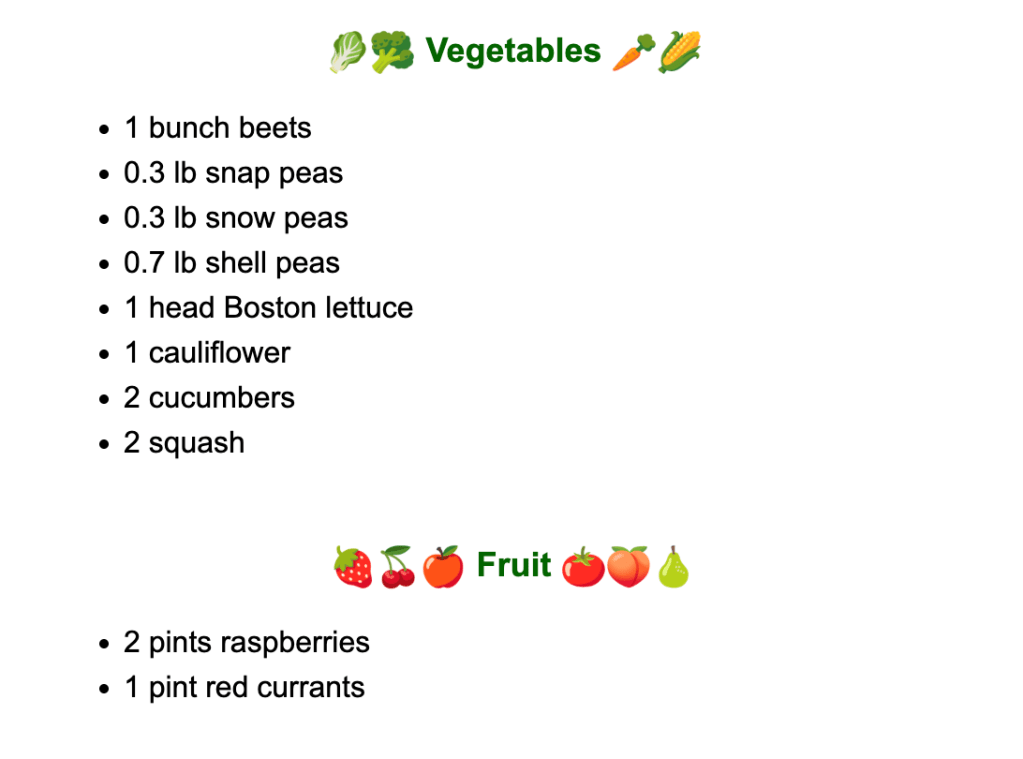
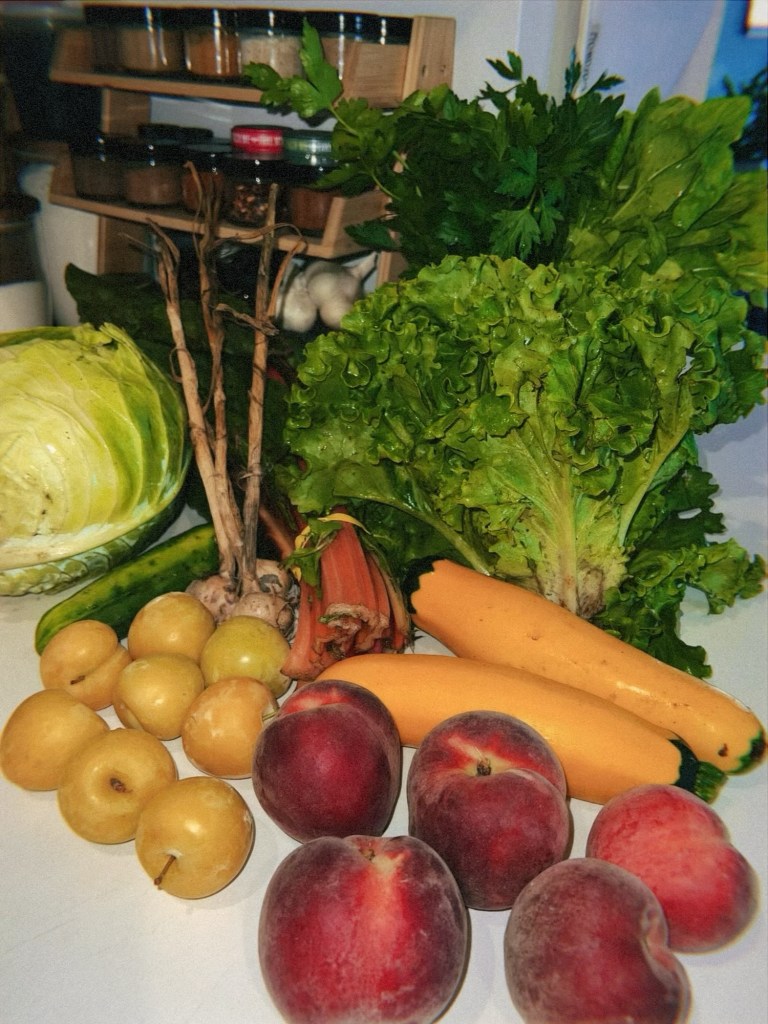
Mid July is peak summer and that came across in full force with the CSA from weeks 5 and 6: we had the usual suspects of courgettes and cucumbers, stone fruits, and fresh peas of all varieties, as well as some special treats like fresh raspberries, beets (!) and our newfound favorite: swiss chard.
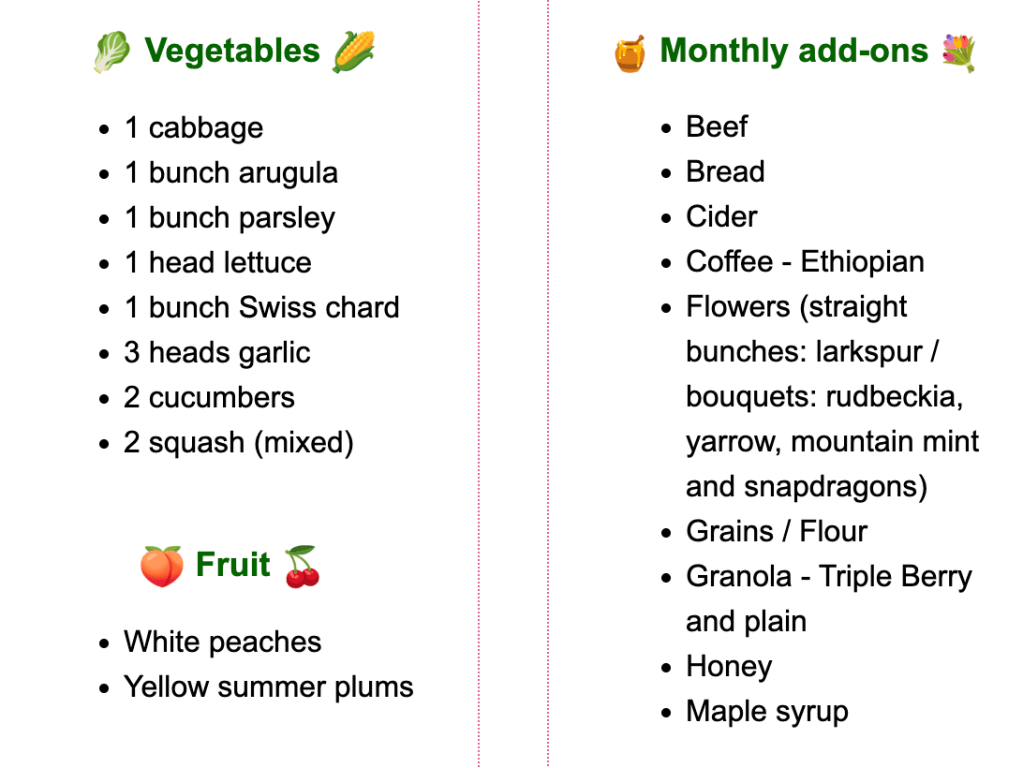
Week 6 was also the first time for monthly add-ons (this was an option presented at sign-up). It coincided with our volunteer shift – every CSA member has to work the CSA at least once, including unloading the truck, divvying up the produce, and distributing it to members coming to pickup. We had only signed up for the beef supplement, but as soon as we saw the various add-on vendors arrive one-by-one, I felt a slight pang of regret. Talk about a bounty! Buckets of fresh flower bouquets, boxes filled with locally milled flour and homemade granola, honey from upstate bees and maple syrup from upstate trees. There was coffee and cider and golden loaves of She Wolfe sourdough bread. The Habana Outpost courtyard was a veritable farmer’s market.
Since we joined the CSA, my farmer’s market attendance has dropped significantly. We have so much produce in need of consumption already, I can’t fathom buying more! Our local farmers markets also coincide with Saturday CSA pickup, so usually I’m too busy sorting through our stash to make a second trip.
With that said, I went last weekend for the first time in a while as we had some friends in town. As I walked past the stands, I felt a strange feeling of deja vu: the various items being sold at all the produce stands looked just like the CSA produce we had picked up earlier that morning! This makes sense since everything is coming from upstate farms and producers. Still, it was interesting to think about how the simple act of getting to select what produce you get comes at a significant price increase. I also realized that the past version of me would not have looked at that produce in the same way. I found myself gravitating towards a pile of white globe eggplants and admiring a towering mound of multicolored radish. In the past, I would have stuck with the safe bets: think heirloom tomatoes and kale. The CSA has challenged me to cook with a wider variety of veggies that I otherwise wouldn’t choose myself, and I think (and hope) this will transform how I look at food moving forward.

Back to week 5. I had invited a friend over for dinner that Monday knowing I would have CSA goods in need of consumption. I had some old garlic scapes from week two (shamefully) and while they hadn’t gone bad yet, I knew they needed to be used up. I didn’t want to make more pesto, so I decided to put them into a different sauce: tzatziki!
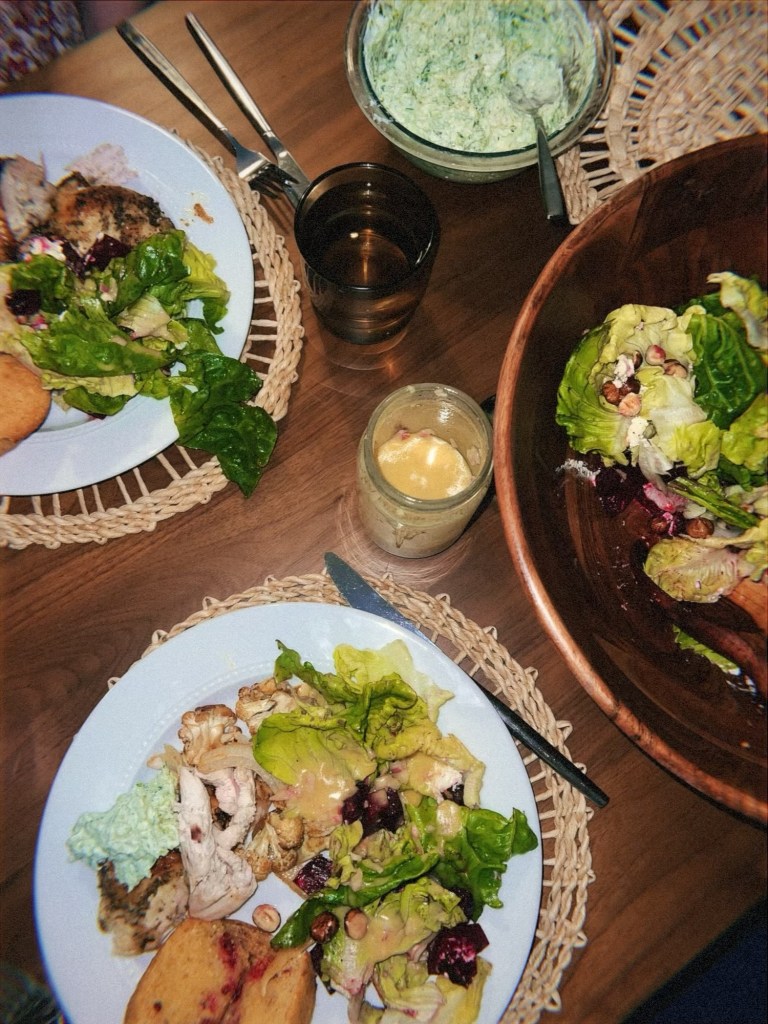
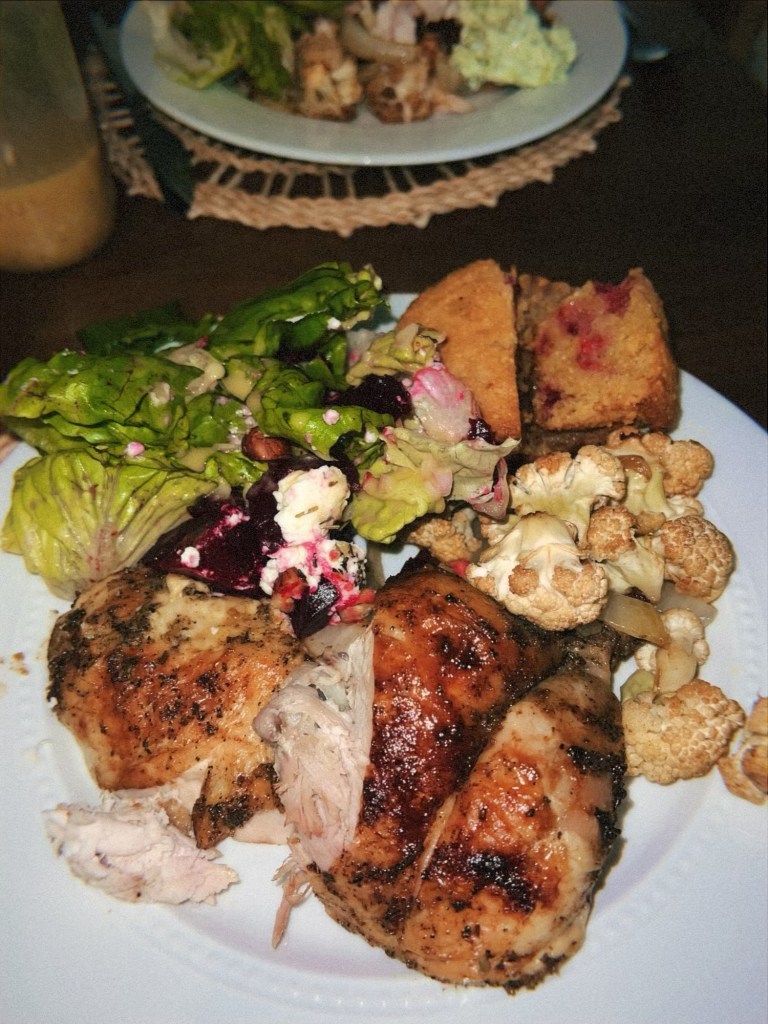
A short brainstorm session later, I had my menu:
- Roasted beet and cauliflower salad with fresh lettuce and goat cheese
- Union Market rotisserie chicken (iykyk) with garlic scape tzatziki
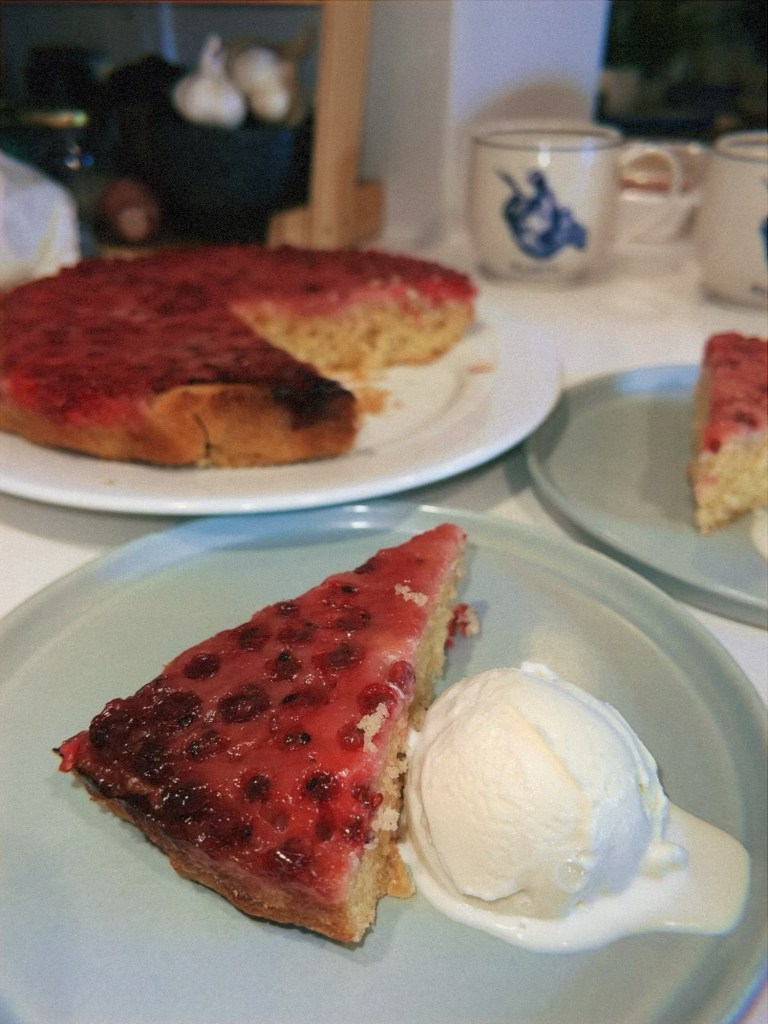
- Red currant upside down cake for dessert
When my friend and I sat down to eat we joked that it felt like we were tucking in to Thanksgiving dinner. It photographed that way as well.


The red currant upside down cake was a recipe that appeared on my feed shortly after I had finally found a use for my first batch of currants, created by the brilliant baker behind the aptly named Red Currant Bakery. As soon as I saw it, I was like “damn, wish I had seen that earlier”. But someone must have been listening, because come the next CSA, more red currants!
I didn’t have enough to put red currants in the batter in addition to the layer on the bottom (or fresh white currants for decoration on top), but nonetheless, it was still delicious. There is something wonderfully dramatic about flipping a cake over when it comes time to enjoy dessert. The uncertainty of knowing what is underneath…. Will it collapse? Will you drop it? And then… the reveal. Pulling away the base of the springform pan and the layer of parchment to reveal a mosaic of jewel-colored cooked fruit, held in place by delicate sponge. 8/10 flavor, 10/10 for upping your hosting game. Guests will be impressed.

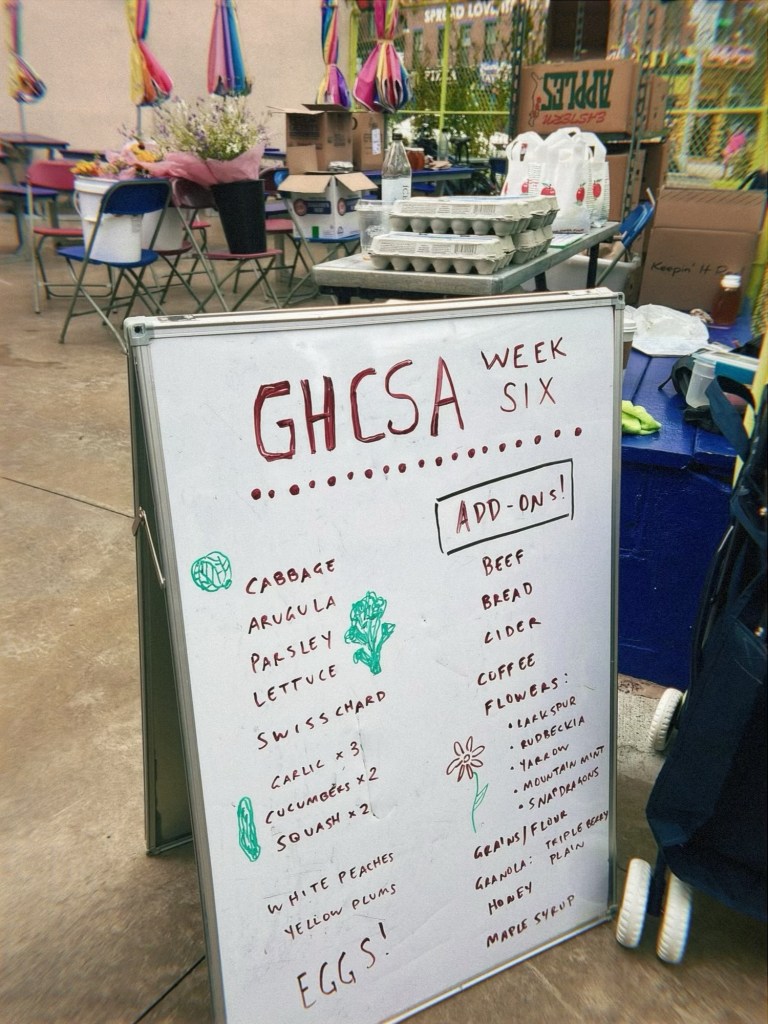
Before we knew it, week 6 was around the corner and with it our volunteer shift. Instructions were given and aprons were handed out (very official). While we waited for the truck to arrive, I was asked to write out the list of items on a whiteboard for that week – I definitely spent too long doing so (but was applauded for my attention to aesthetics).
We formed an assembly-line to unload the boxes of produce. Lesson #1: produce is heavy! We particularly experienced this when we unloaded what felt like way way too many boxes of cabbages.
After unloading, we had to start dividing it up into individual shares, packaged in brown paper bags. Once again, assembly line for the win – I was on zucchini, cucumber, and cabbage duty. My fellow volunteers and I chatted as we packed up the bags. I’ve joked for a long time that my ideal job is “farmer’s market”, not really specifying what it would entail. After this volunteer shift, however, I think it probably looks a lot like working at the morning CSA pickup.
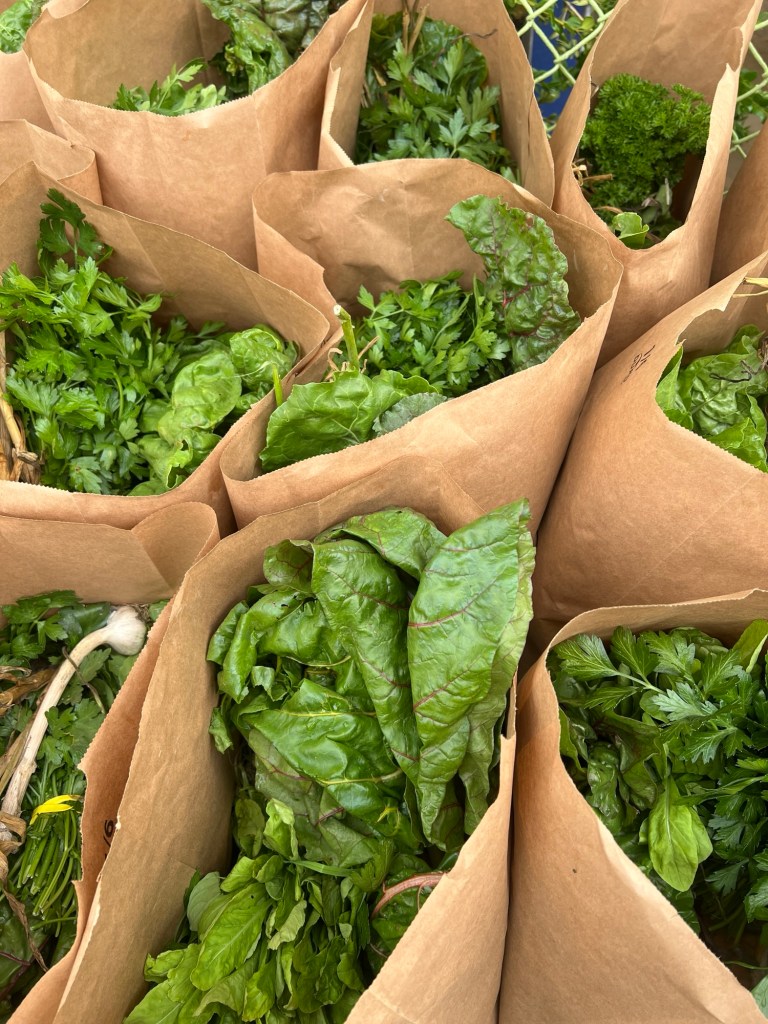

Post-shift we took our own bounty home, unpacked it, and asked ourselves: what do we want for lunch? The CSA gave us our answer: pad krapow with farm-fresh ground beef and stir fried lettuce with crispy garlic and eggs (to use up the previous week’s allotment of Boston lettuce).
It is incredible to watch what happens when you stir fry an entire head of lettuce. What once was enough to feed several people (potentially over the course of multiple meals) shrinks down to barely fill a small cereal bowl. I suppose this is the law of any water-packed leaf: spinach, chard, collared greens, kale. Still, I never fail to overestimate how much will remain once it goes on the stove.

We knew that week 6 would be a short one as we would be leaving for a trip – Dev was leaving the next morning and I would meet him later that week. Seeing all the delicious CSA items that he might miss out on (and that I also would never be able to consume alone), I developed a plan that optimized our ability to enjoy this peak summer produce:
Step 1: go all out for Saturday night
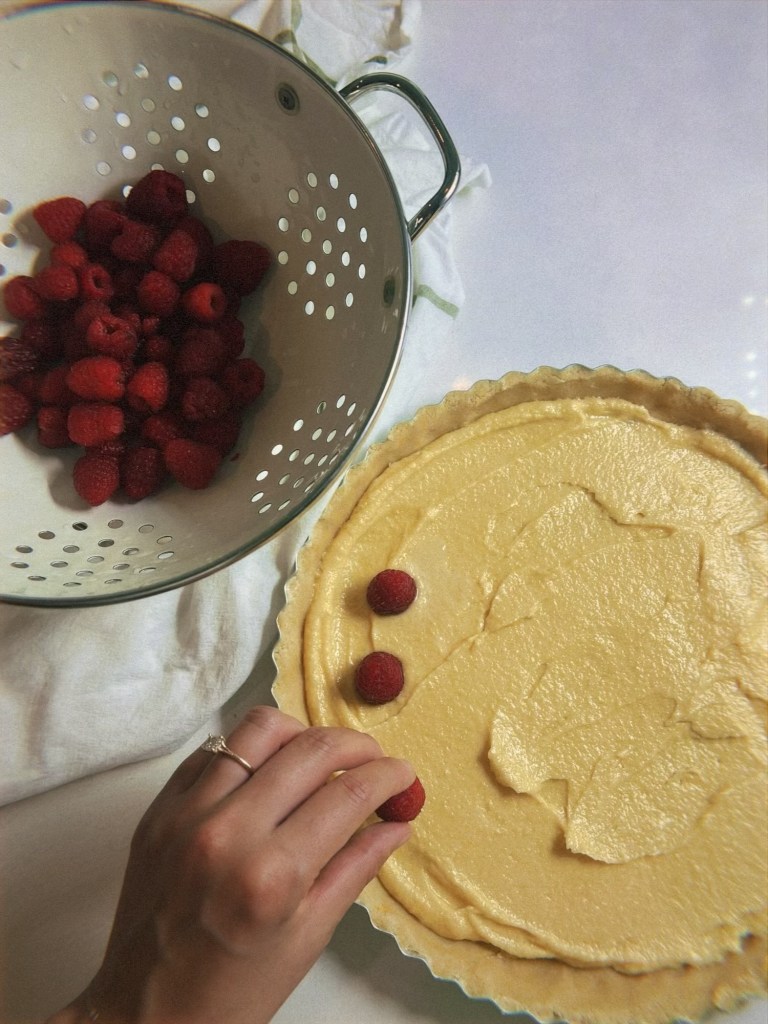
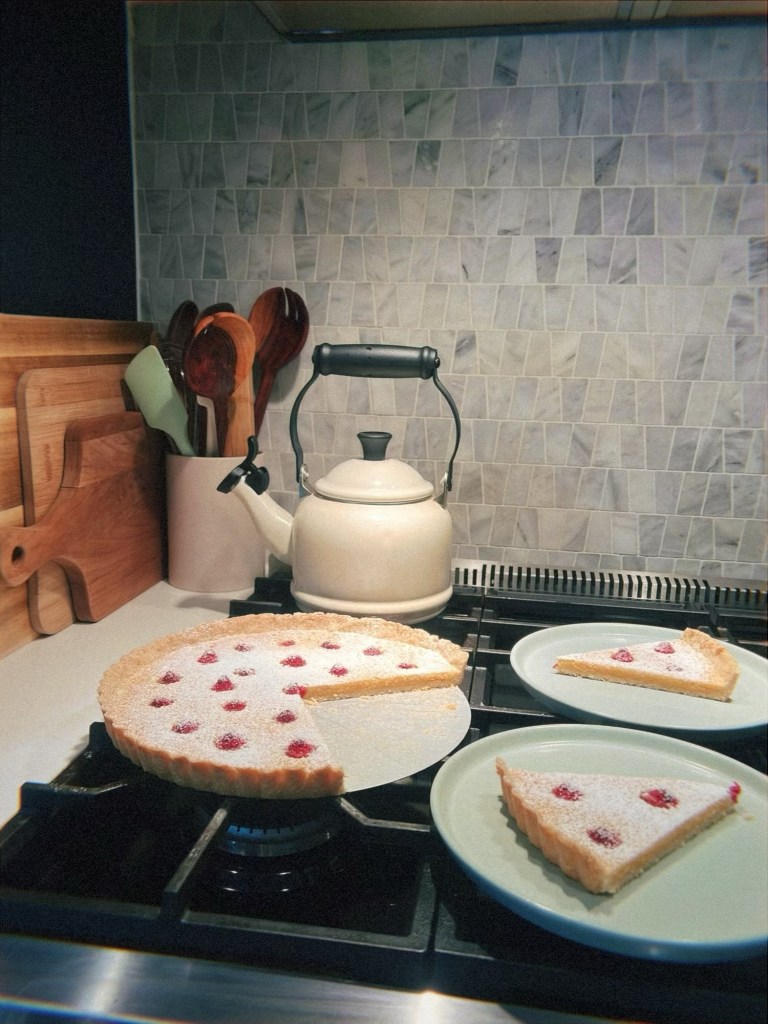
Even though we had just cooked lunch, we said fuck it. We cleaned up and I immediately got to work on crafting dessert. We had raspberries from week 5 and it immediately brought back memories of early pandemic baking inspired by everyone’s feel-good-favorite reality tv show: The Great British Bake-off (or GBBO for the real ones). One of our favorite things to make during lockdown was Mary Berry’s frangipane tart. These were also during the days before I had a baking scale, so for a time I had a note on my phone where I had converted the measurements from grams to cups and tablespoons (and a note that converted the baking temperature from Celsius to Fahrenheit). Her recipe calls for the addition of pear, but we found that it works just as well with raspberries.
After dessert, we got started on dinner: garlicky swiss chard and CSA steak (yes, a very beef heavy day, but sometimes you gotta just go for it). This was fortunately simple enough to execute and we got to take advantage of the Shrinking Leafy Green Principle to transform a massive bunch of chard into barely enough for two people.
Stuffed, Dev packed for his trip and I cleaned up. I packed him some tart for his flight and bid him adieu.

Step 2: Preserve, preserve, preserve
I spent all day Sunday in the kitchen. By the end of it, I was exhausted. Still, I was on a mission and I knew what I had to do. My checklist for the day included the following:
- Cabbage and zucchini/cucumber kimchi
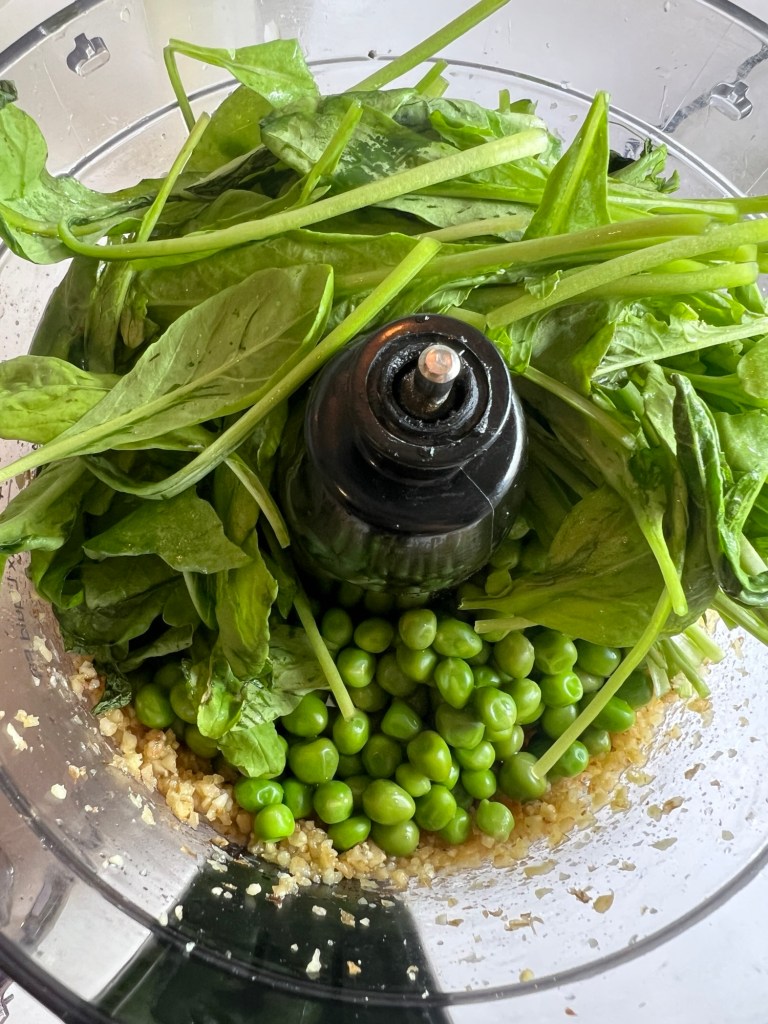
- Pea arugula hazelnut pesto
- Parsley mint pesto
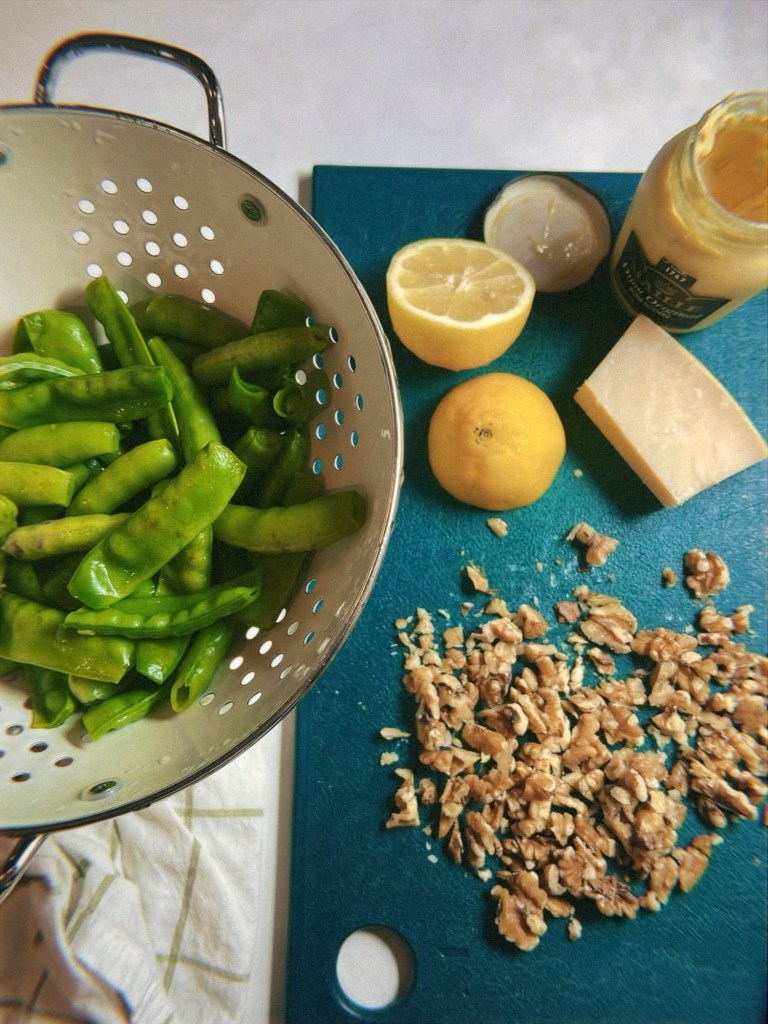
- Snow pea and snap peas walnut parmesan salad
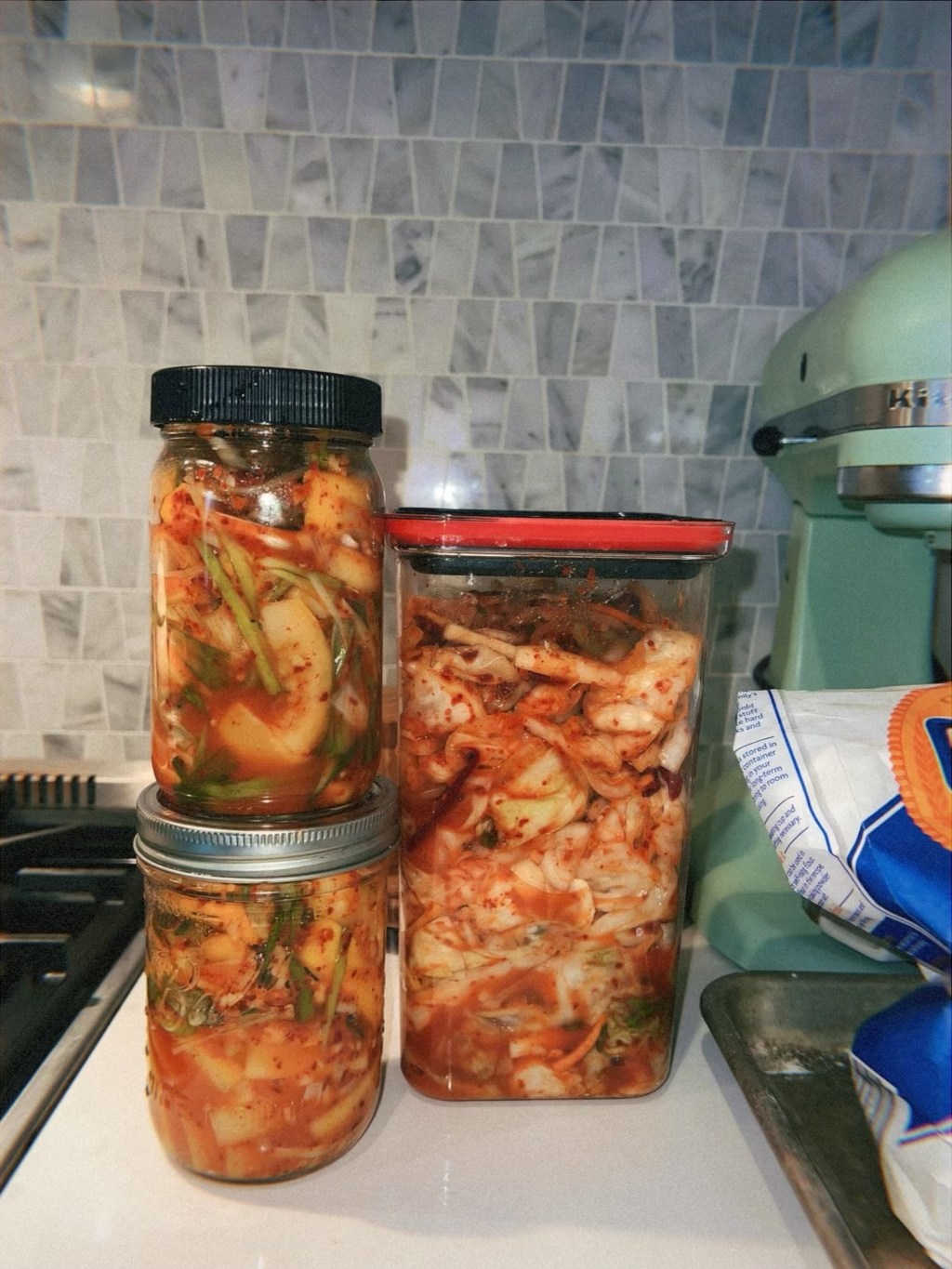
I first learned to make kimchi in the pandemic – Dev’s friend from high school had convinced her mom to start making and selling kimchi and on the side she started hosting virtual kimchi making workshops (shout out to Sue Chef Kimchi!). We did one of these workshops and prepared traditional Napa cabbage kimchi or Baechu-kimchi – the most traditional type of kimchi. We even went out and bought containers perfect for storing the stuff.
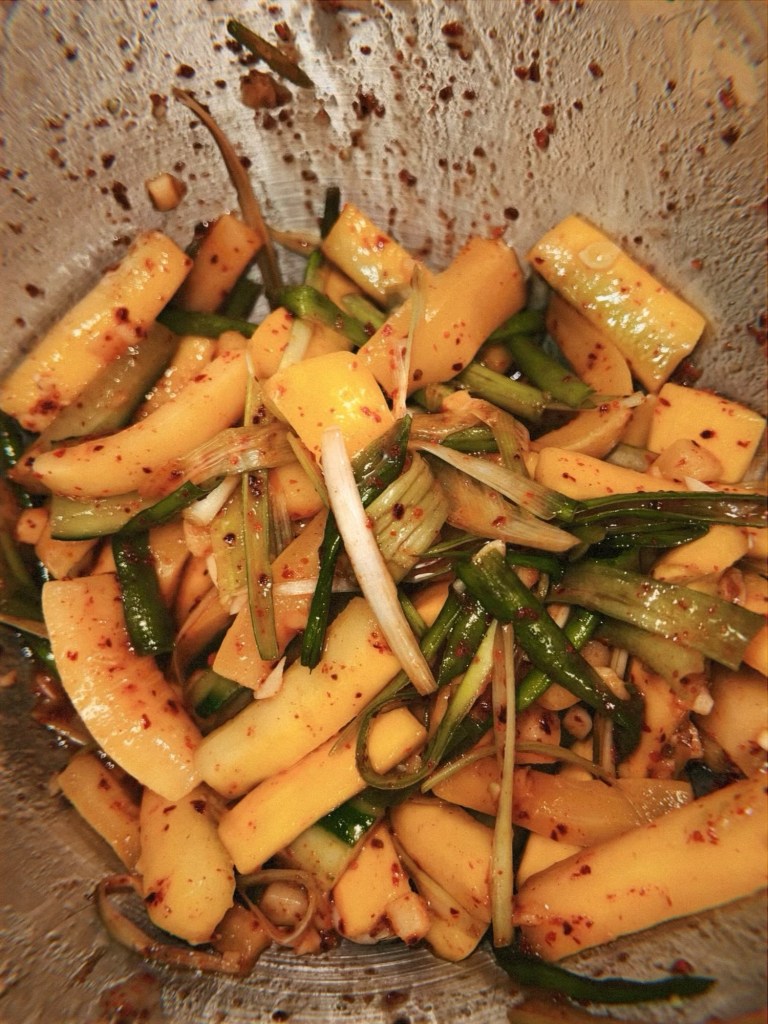
The process of making kimchi is easy but you have to be prepared to take your time. First you prep your veg – brining it with salt. This is what preserves the kimchi and allows it to ferment over time. I was making this kimchi with green cabbage, not Napa, but the principle was the same. I also decided to experiment and transform the zucchini and cucumbers into kimchi as well. Cucumber is a fairly common kimchi ingredient (alongside radish, another popular kimchi vegetable). Zucchini, while not traditional, felt like it could work, and I found one recipe online that helped guide my process.
For both, once you finish brining, you mix it all together with your other ingredients (green onion, ginger, carrot, garlic), gochugaru (Korean chili flakes), fish sauce, and a glutinous rice paste that you make by cooking down rice flour and water.
Then, it all goes into a container to ferment! You can leave it on the counter overnight to accelerate this process and then it should keep in the fridge for… indefinitely? Don’t take my word for it, I’m not a food safety expert. But I will say, we still have the leftover kimchi in our fridge today and last I checked, it’s still good.

After the kimchi, I went into pesto mode and made both back-to-back. I found the recipe for the parsley mint pesto on NYT cooking – apparently it is very good on pizza and sandwiches. It is still in our freezer, so I can’t yet attest to this application. The arugula pea hazelnut pesto, on the other hand, was the perfect addition to a pasta salad we made a couple weeks ago – I highly recommend.
By the time all of this was done, the thought of continuing to cook made me want to cry but I persevered. I prepped my snap pea snow pea salad and served it alongside my favorite solo dinner: Annie’s white cheddar mac and cheese (shells, obviously). I sat down on the couch and let out a sight of relief. My work was done.


Step 3: Bring dessert to your friends for dinner
The last item on my CSA cooking agenda before I left was to make the most of the beautiful peaches and plums. When in doubt: make a crisp. My go-to recipe is buried deep in my email inbox: a Claire Saffitz original sent in her Patreon days.
I brought this as my contribution when my dear friends invited me over for a summer dinner on their patio. It was perfectly tart and buttery and sweet with a hint of cardamom. An excellent application of summer stone fruit.
With that, I went home, packed my bags and admired our empty produce drawers in the fridge. Now that’s how you CSA.

 Savor Tooth Snacks
Leave a comment