

One week into our CSA season, we found ourselves committing one of the cardinal sins of community shared agriculture: we went out of town. I say this only somewhat in jest and given the season is 25 weeks long, it is inevitable that you may find yourself in this situation at least once if not on multiple occasions. The challenge with a CSA is that it shows up every week, regardless of your schedule. This leaves you with a few different options if you find yourself on vacation when it comes time to pick up your harvest:
- Share the (CSA) love! AKA find someone else to take it. This is obviously a perfectly reasonable option and is actually how we found ourselves signing up this year – we had a chance to trial it, risk free, when someone offered their CSA pickup while they were away. However, it does require a bit of coordination, pre-planning, and sadly, means you don’t get to partake in that weeks’ goodies. This feels like the best approach when you are going away for a prolonged period of time (e.g. more than a weekend) – gifting it ensures that the produce is enjoyed at its freshest.
- Proxy pickup. If you are only away for the weekend, it may be a good option to ask a friend to pick it up on your behalf and pop it in your fridge for you to enjoy when you return. Note that this approach works best when you offer a portion of your produce as a thank-you.
- Oops didn’t pick it up. My least favorite option, but sometimes unavoidable. Still, never fear! All leftover produce from the CSA is donated, so nothing really goes to waste.
In this particular situation, we were only absent for the weekend and a very good friend offered to pick up our CSA for us while we were gone. In exchange, we gifted him a pint of CSA strawberries. Ironically, that same friend promised to proxy pick up for a different friend the following weekend (week 3) and forgot (it happens!), so we ended up giving some of our produce to them as well.
As a result, we found ourselves with a bit of overlap between weeks 2 and 3, so much of what we made was a combination of the two bounties:
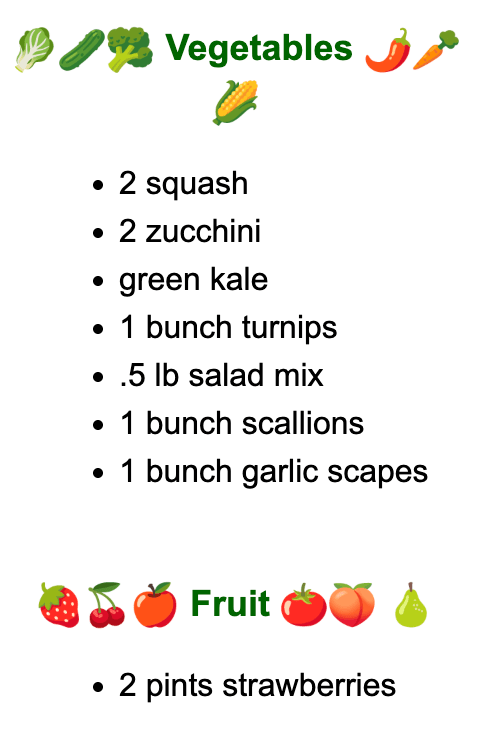
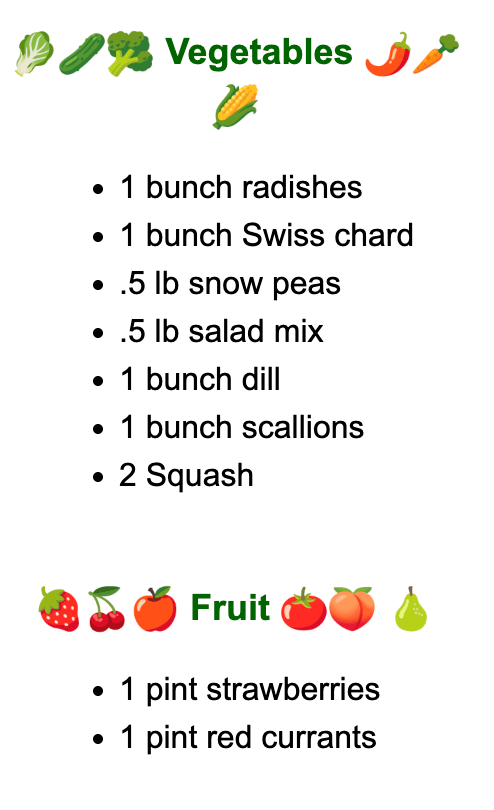
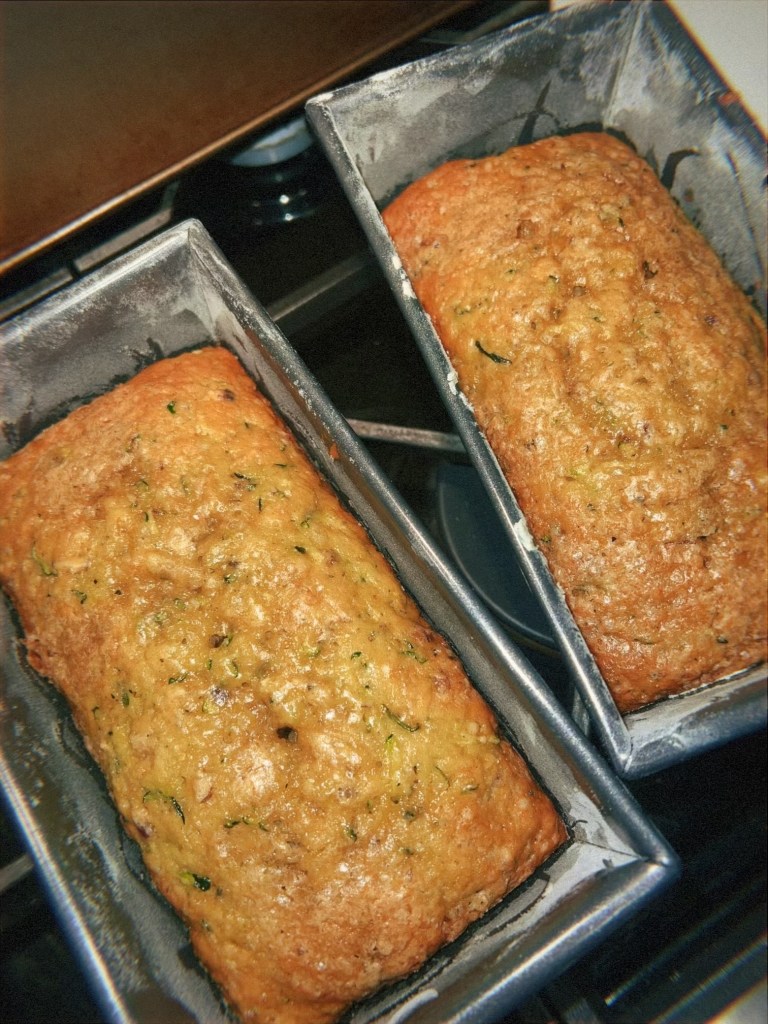
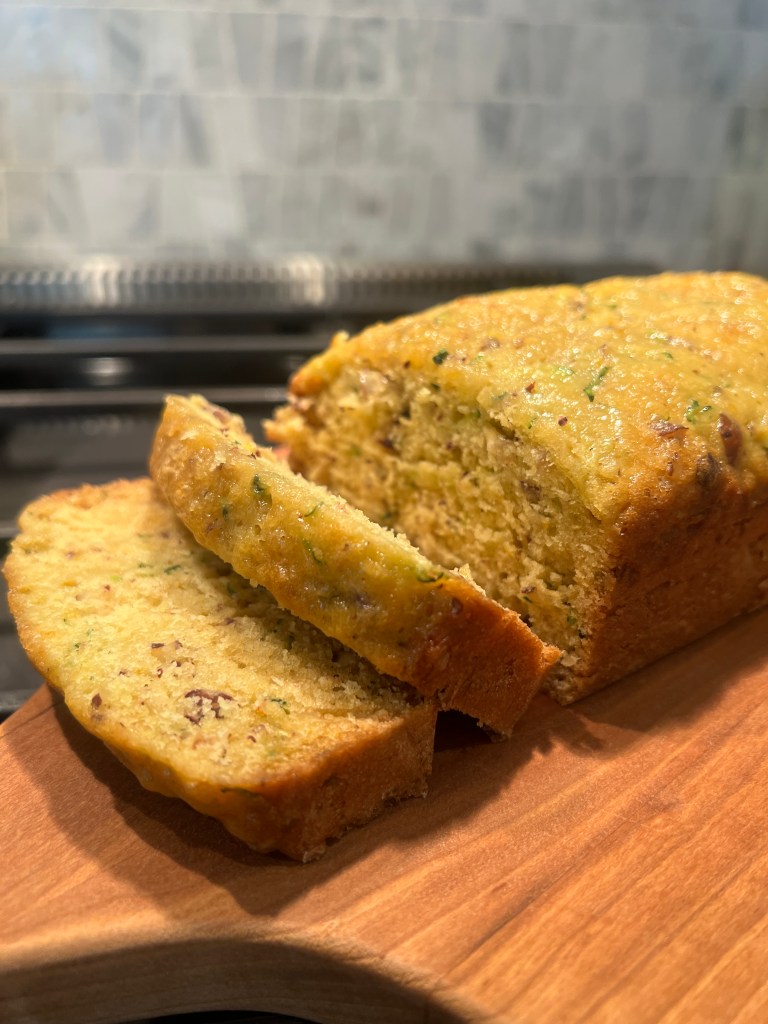
As soon as I saw zucchini on the list, my instinct was to make zucchini bread. I don’t think I’ve ever made it before (we weren’t a big zucchini household, growing up), but it felt like a great excuse for a baking project. I did some recipe research, and found myself drawn to a NYT Cooking recipe:
Zucchini Cake with Ginger and Hazelnuts
The recipe itself calls for the cake to be made in a bundt pan, which I don’t own and unfortunately don’t have space for even if I wanted a cake with a hole in the middle. However, I do have two loaf pans and figured it would be fine. Spoiler alert: it totally was fine! This cake was so incredibly easy to make. The final result was light and moist with a nice kick from the ginger and toasty crunch from the hazelnuts. My only note is that it is definitely best enjoyed fresh as the ginger flavor becomes a little bitter after a day or two, but otherwise, no notes! 10/10 would make again.
I have never bought turnips in my life. To be completely honest, I don’t even know if I could describe how they tasted before I found myself with a bunch in our CSA. They are in many ways, similar to radishes, but a bit softer in texture and milder in flavor. Still, I hadn’t the faintest idea when it came to figuring out what to make with them.
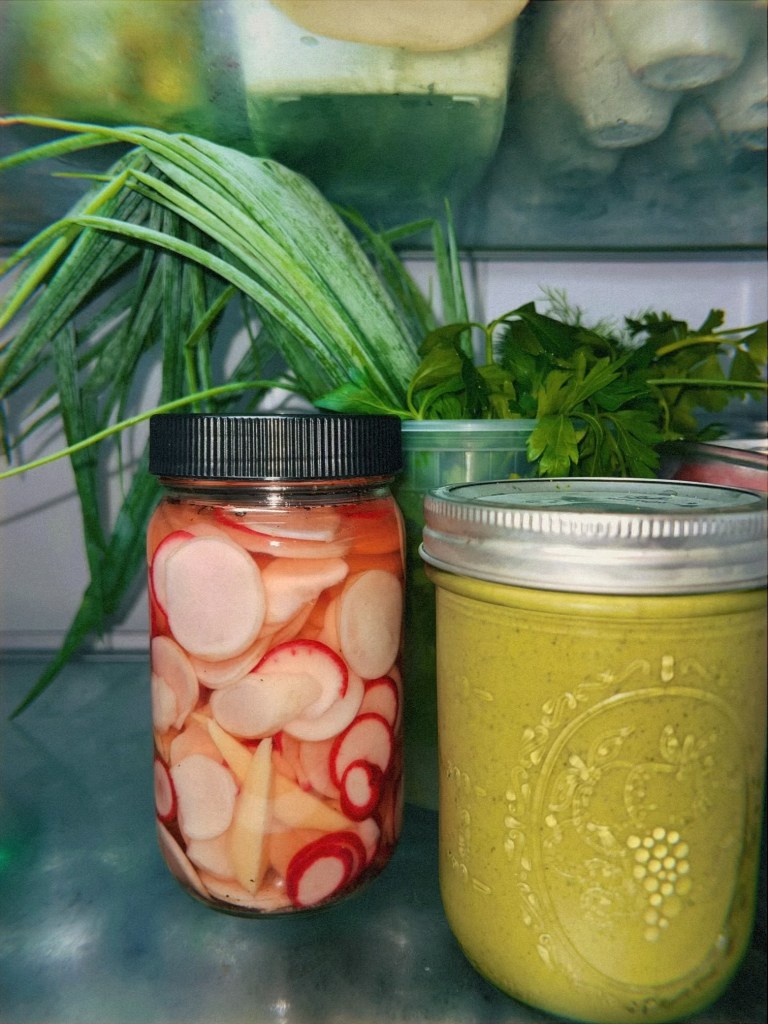
Then, I recalled a recipe which called for a quick pickled radish. If you could pickle a radish, why not a turnip? I broke out my mandolin (don’t worry, I used the safety handle to avoid losing any fingertips) and found a recipe for Pickled Hakurei Turnips. I tossed in the radishes as I didn’t have any plans for those, and voila! An easy addition to any dish that would benefit from a zip of acid and a bit of crunch.
This also brings us to a third prong in my CSA philosophy:
3. Pickle, ferment, or preserve it! Before we had reliable refrigeration and a global food system that allows you to get pretty much any produce you want year-round, if you wanted to keep things for a prolonged period of time, you had to figure out how to extend its lifespan. As a result, there are many time-tested preservation techniques at your disposal:
- Pickling involves submerging your desired food (turnip, cucumber, egg, etc.) in a highly acidic solution which naturally inhibits bacterial growth and spoilage
- Fermentation is a similar approach but instead relies on bacteria to create lactic acid when put in an anaerobic (low oxygen) environment. This lactic acid also helps inhibit other microbes from growing and spoiling your food
- Preserves, jams and jellies also rely on a high sugar/acid content to prevent bacterial growth and extend the shelf life of the product
Can confirm these pickled turnips and radishes lasted longer and made a great addition to several dishes over the following weeks.
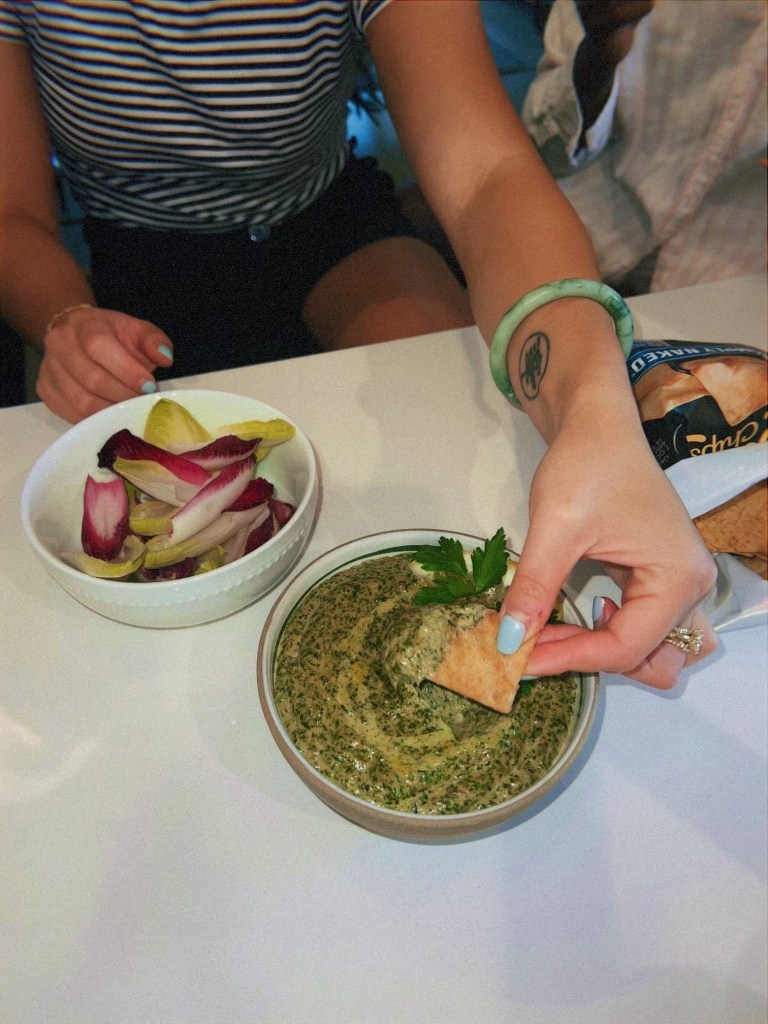
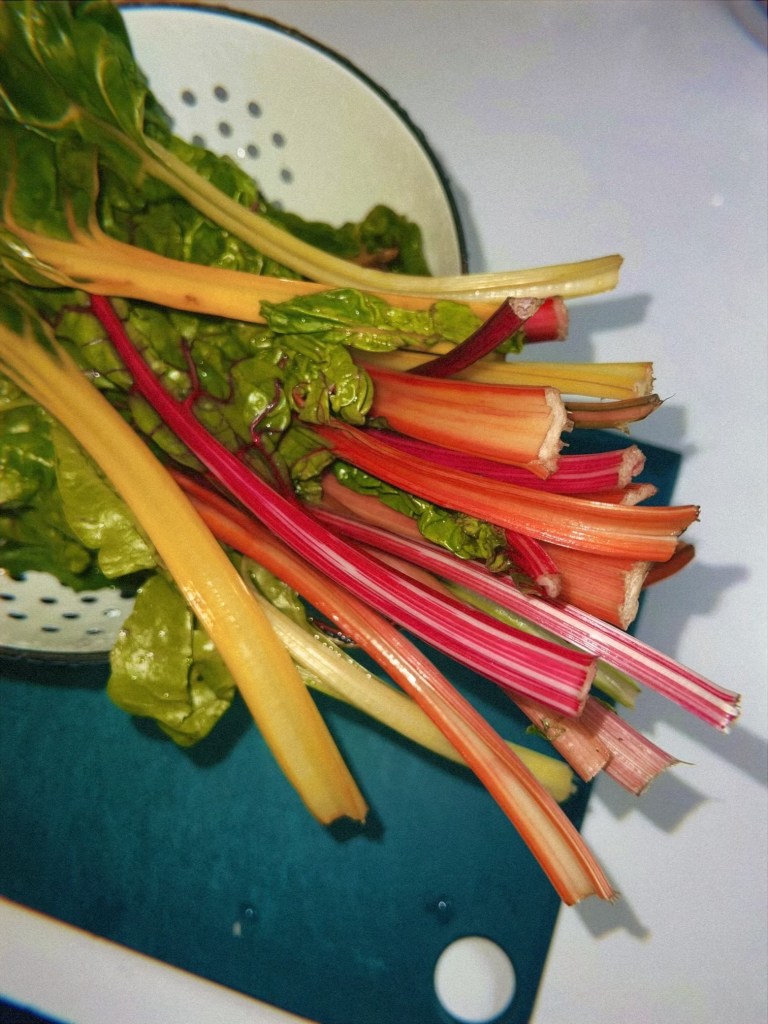
Rainbow chard is aptly named. With each stalk a varying ombre of pink, orange, and yellow, it is definitely among the class of super-model veggies. As pretty as it is, I have to admit I had no idea what to do with it other than stick it in a pan and let it cook down with some olive oil and garlic. That felt uninspired, however, and I was anxious about letting the vibrant stalks go to waste (most recipes ask you to “remove the ribs”). So, when I came across this recipe for Swiss Chard Tahini Dip, I was simultaneously relieved that it called for the entire swiss chard, stalk and all (yay no food waste!) and disappointed that the colors would be lost to the food processor.
Still, I love tahini and the final result was delicious – so much so, we nearly forgot to take a picture before we dug in.
Last on the docket: red currants. What to do, what to do? I have never seen, tasted, or cooked with currants of any kind, so I didn’t know where to begin. Some preliminary recipe research led me to a recipe for a red currant clafoutis which seemed easy and unique – I decided to make it for dessert at a dinner party we had with some friends. Time, however, got away from me, so I ended up serving zucchini cake instead. The red currants went to the back of the fridge.
Then, I caught a glimpse of some delicious looking corn muffins on Dan Pelosi aka Grossy Pelosi’s feed. I was instantly inspired: why not add red currants to the muffin batter? Tart currants meet sweet, toasty corn – a perfect flavor match!
Sure enough, the muffins were quite the success. I shared them with multiple friends and all of them asked to take some home. Now, whenever I have currants and no idea what to do with them, I will be whipping up a batch of these muffins.
And for anyone wondering, don’t skimp on the honey butter!!!

Honorable Mentions
Here are a few other things I made from weeks 2 and 3 of the CSA that I didn’t have time to go into detail on (but still very much enjoyed):
- Salad with green goddess dressing (dill) topped with scallions, radish, and toasted sunflower seeds
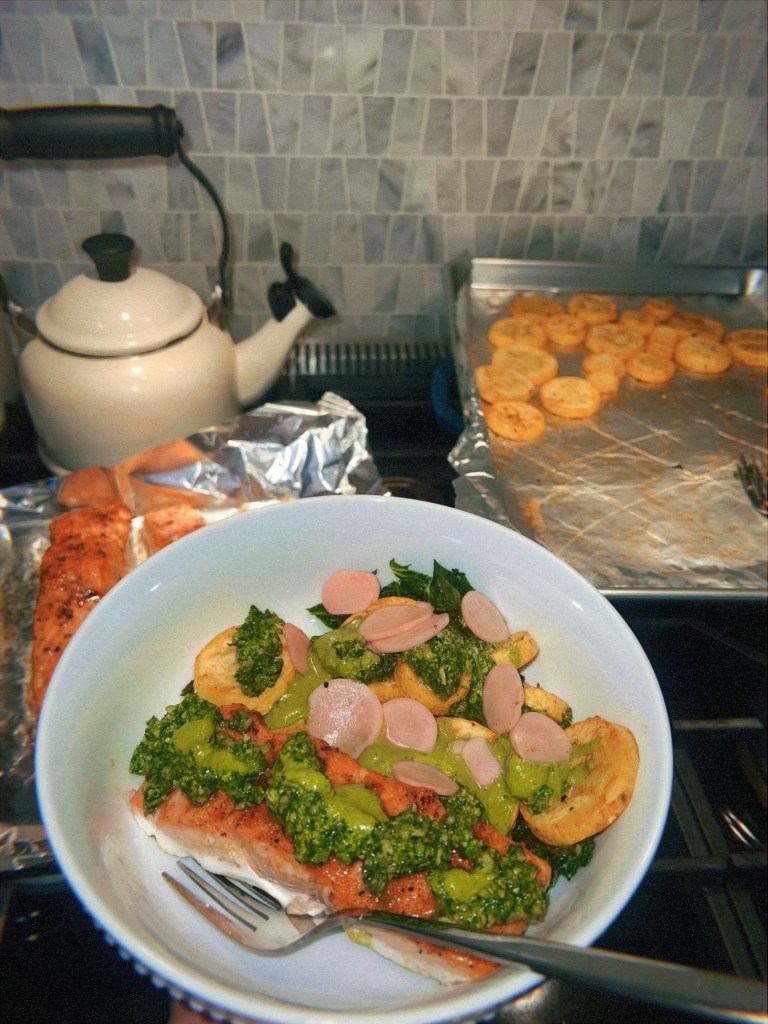
- Roasted squash and kale served with salmon and un-frozen cilantro pesto from CSA week one
- Caesar potato salad with radish and dill from Molly Baz
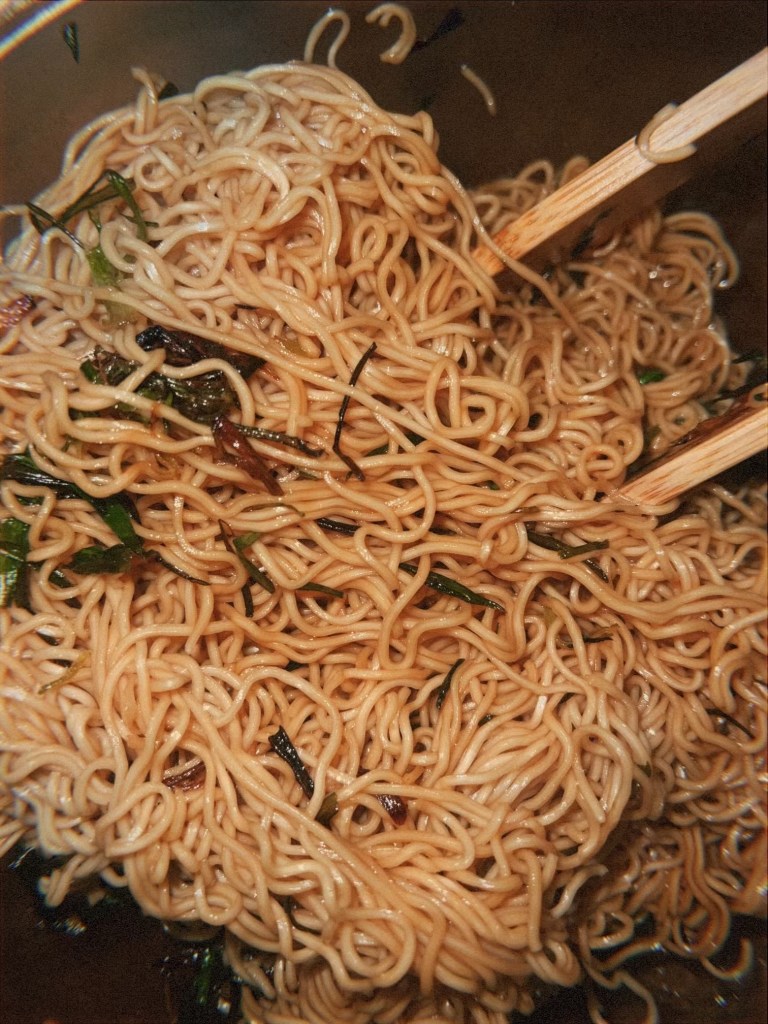
- Scallion noodles
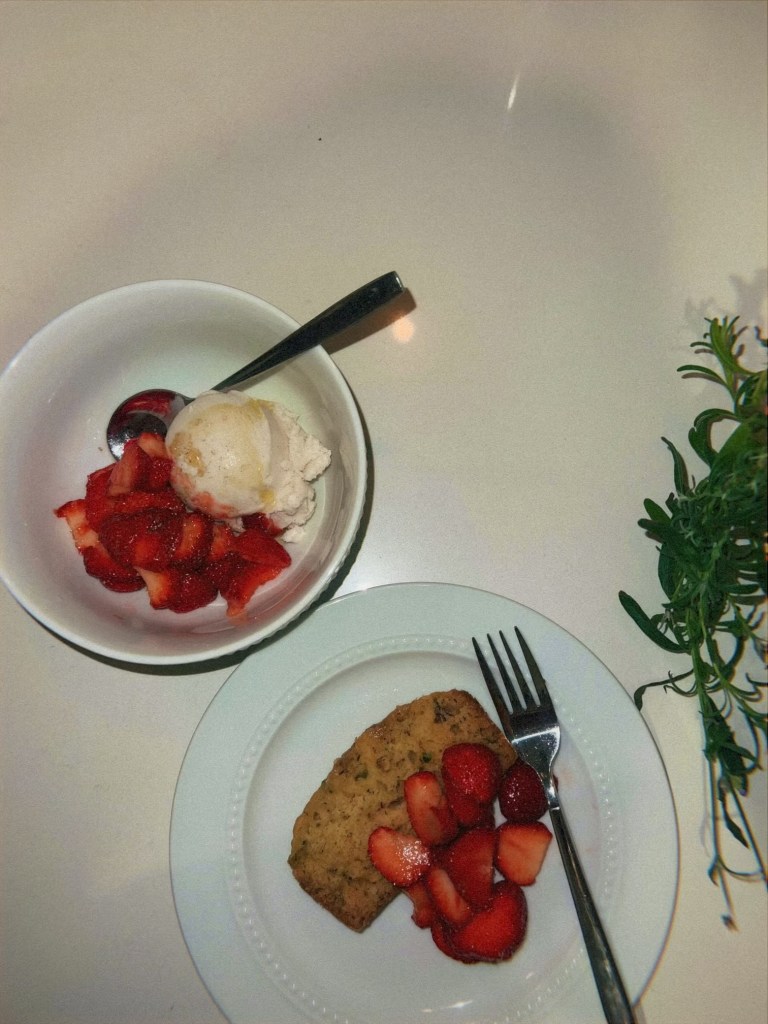
- Macerated strawberries with vanilla Oatly topped with lemon zest, flaky salt, and a drizzle of olive oil (the perfect dessert, I will fight anyone who says otherwise)
Cardinal Sins of CSA
I. Thou shalt not forsake thy CSA by going out of town.
For how shalt thou partake in the bounty of the land if thou art sipping cocktails in another zip code?
II. Thou shalt not order take-out whilst thy fridge overfloweth with righteous vegetables.
Pad Thai may tempt thee, but the wrath of rotting zucchini is swifter than the delivery driver.
III. Thou shalt waste not the gifts of the earth, lest thy soul be weighed down with compostable guilt.
Verily, there are three levels of sin in this regard:
a. The stem, the leaf, the root—all shall find purpose, lest thou be judged by the compost heap.
b. To let produce rot and then compost it is a crime of neglect.
c. To let it rot and toss it in the trash… this is blasphemy most foul.
IV. Thou shalt bring thine own bags.
For paper bags are but feeble vessels, and the sidewalk shall be thy shame if thy rutabagas spill forth.
V. Thou shalt not force thy friends to endure cabbage dinners against their will.
It is written: hospitality is sacred, but so too is a decent meal. Take heed.
 Savor Tooth Snacks
Leave a comment