
I love markets. Be it your local grocery store, neighborhood bodega, Saturday-morning farmer’s market, international bazaar or mercado, the act of wandering these spaces brings me joy. When I walk into a market, all of my senses are bombarded. The sheer volume of things to see and touch, the bountifulness of it all, inspires a sense of awe. The amount of choice at your fingertips – do I want this, or that? – grants a sense of control. And no matter what you walk away with in hand, whenever I leave a market, I feel mentally satiated – my senses quenched.
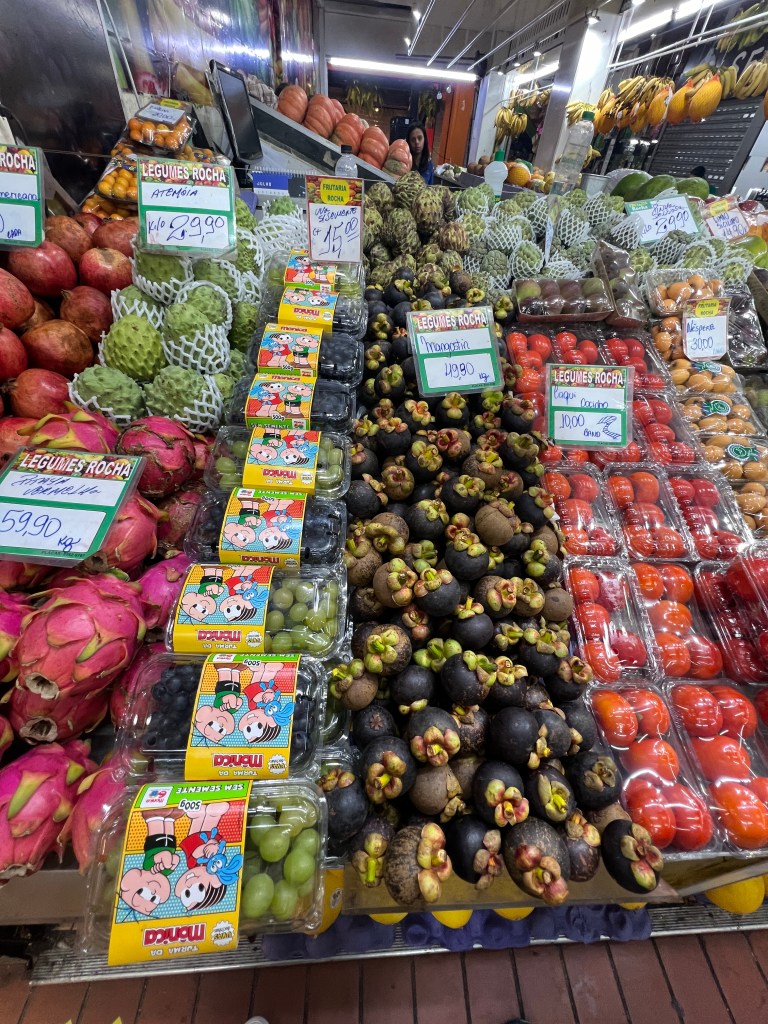
As I mentioned in my last post, I recently went on a trip to Belo Horizonte, Brazil. Belo is the capital city of Minas Gerais state and is known for having some of the best Brazilian food in the country. My manager, on multiple occasions, informed me that Mineirês (people from Minas Gerais) are extremely proud of their cuisine and will take great offense if you insinuate that it is anything but the best Brazil has to offer. Given this fact, even though the trip was for work, I spent one of my mornings exploring the local Mercado Central to see for myself. Sure enough, this market delivered the sensory overload I was looking for.
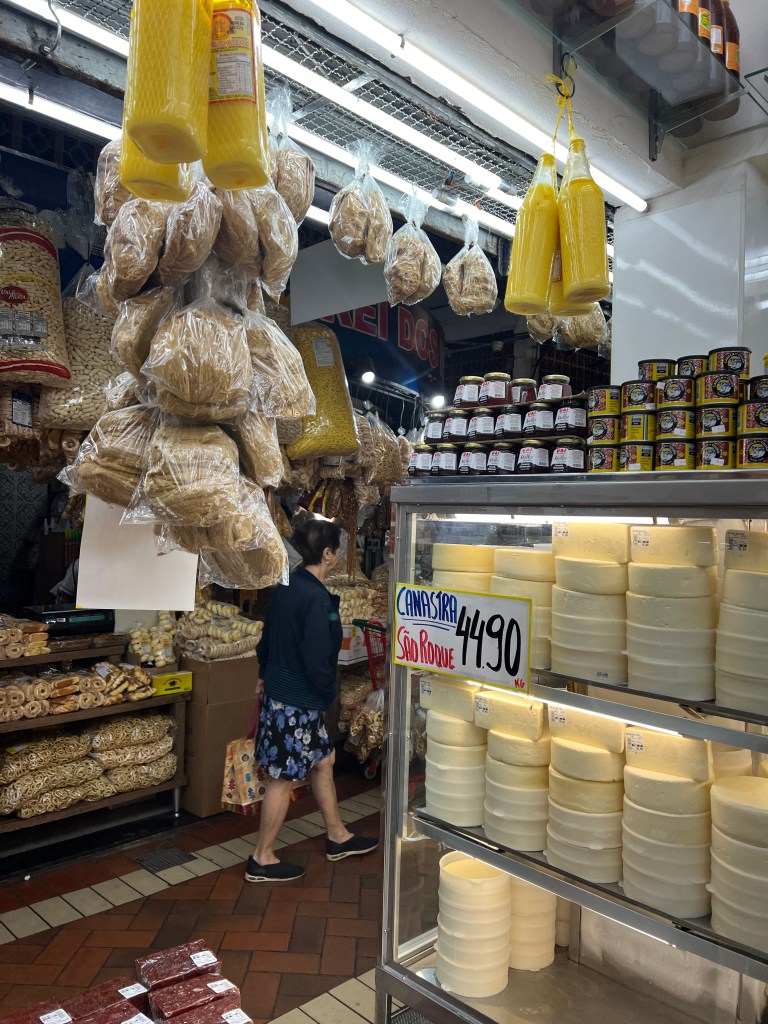
As soon as we entered the market, walking down from a top-level parking lot in a space that fills an entire city block, you see forking paths with stalls lining either side as far as the eye can see. Stacks of colorful packaged goods line shelves or hang from the ceiling of each vendor, signs in Portuguese dictate what’s inside and a price point. I was lucky enough to have my coworker there to play tour guide and translator – English is not commonly spoken and I had neglected to study even basic Portuguese phrases in advance of my journey. I also found myself making purchases without really knowing the true cost as I had also neglected to learn the exchange rate between USD and Brazilian Real (fortunately this was not an issue as the rate is 1:5.63).
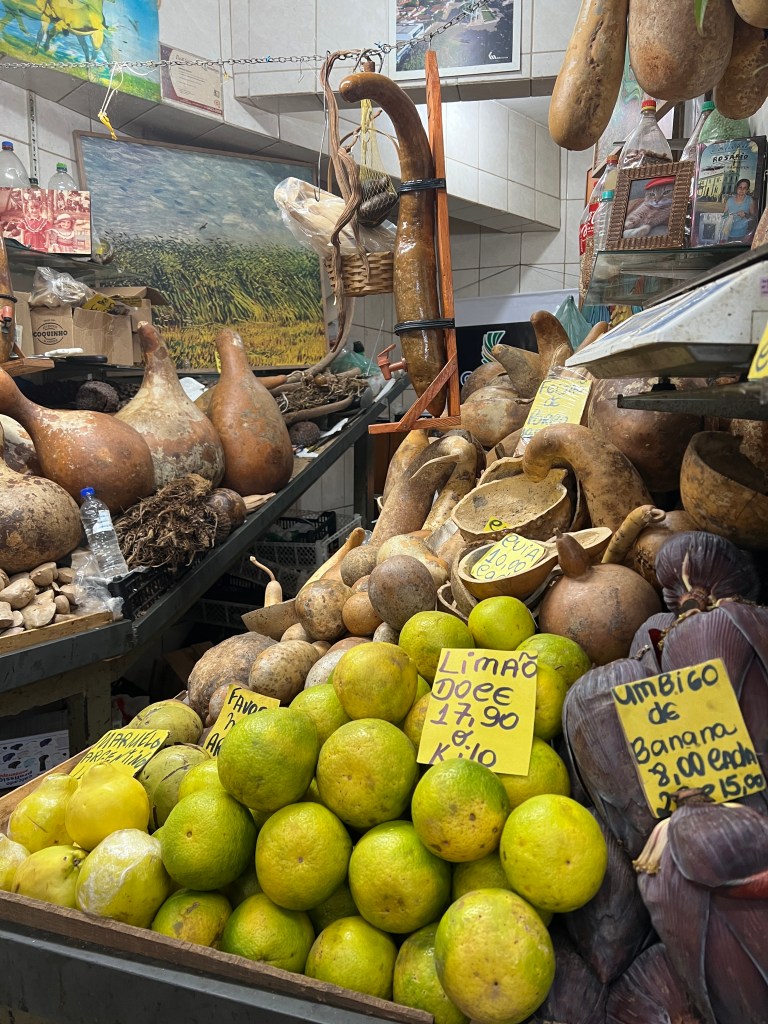
Every stall was overflowing. We walked past piles of produce – some I recognized, like dragon-fruit, pineapple, and mangosteen. I stopped my coworker and asked for an explanation when we stumbled upon a precarious heap of large purple buds labeled “umbigo de banana”. He chuckled and said that the literal translation was “the belly button of the banana” and that these buds were the flowering part of a banana tree, sprouting out the bottom of a banana bunch. Along the way we stopped and ordered fresh squeezed sugar cane juice and pineapple to take back to the office and share.
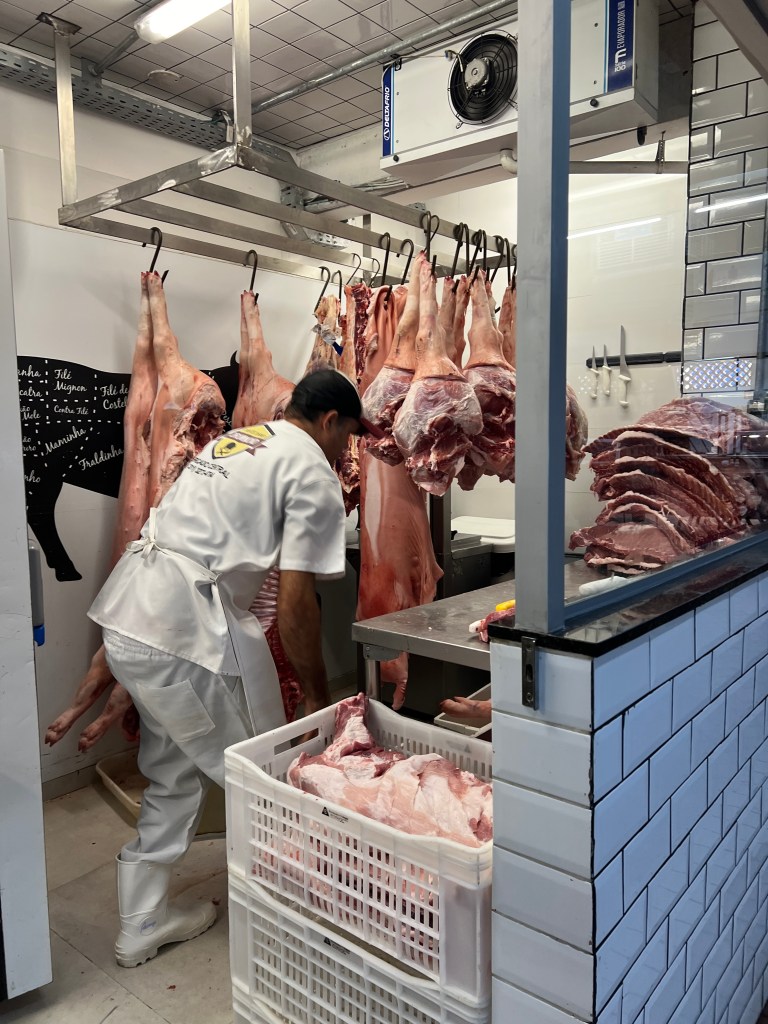
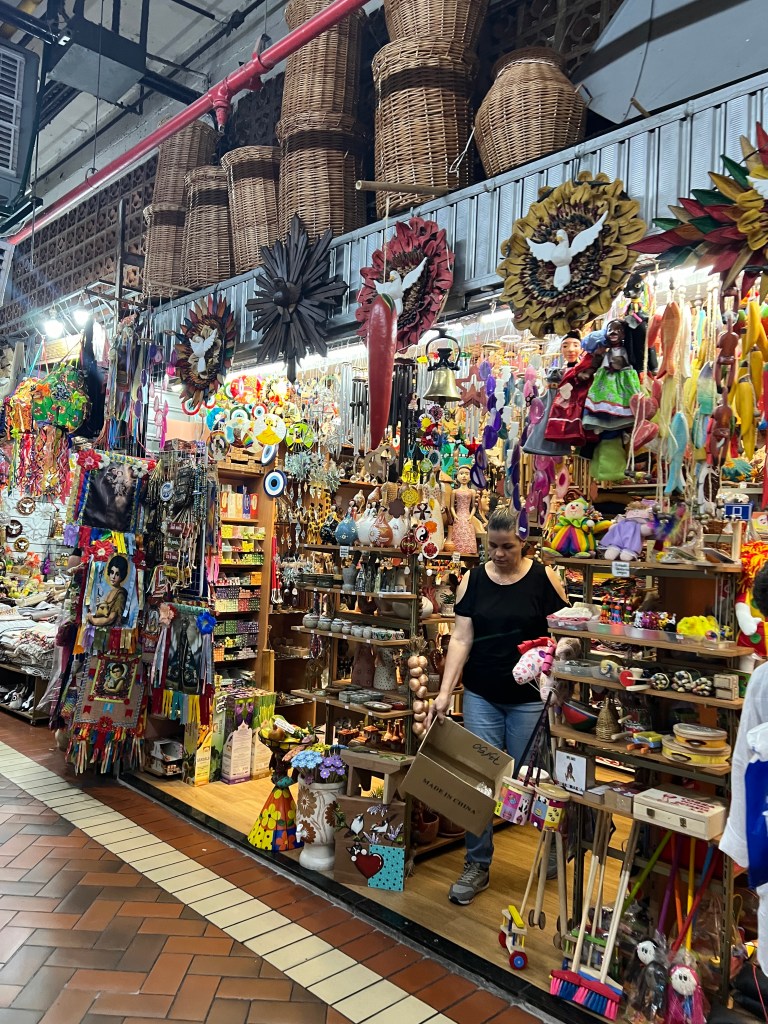
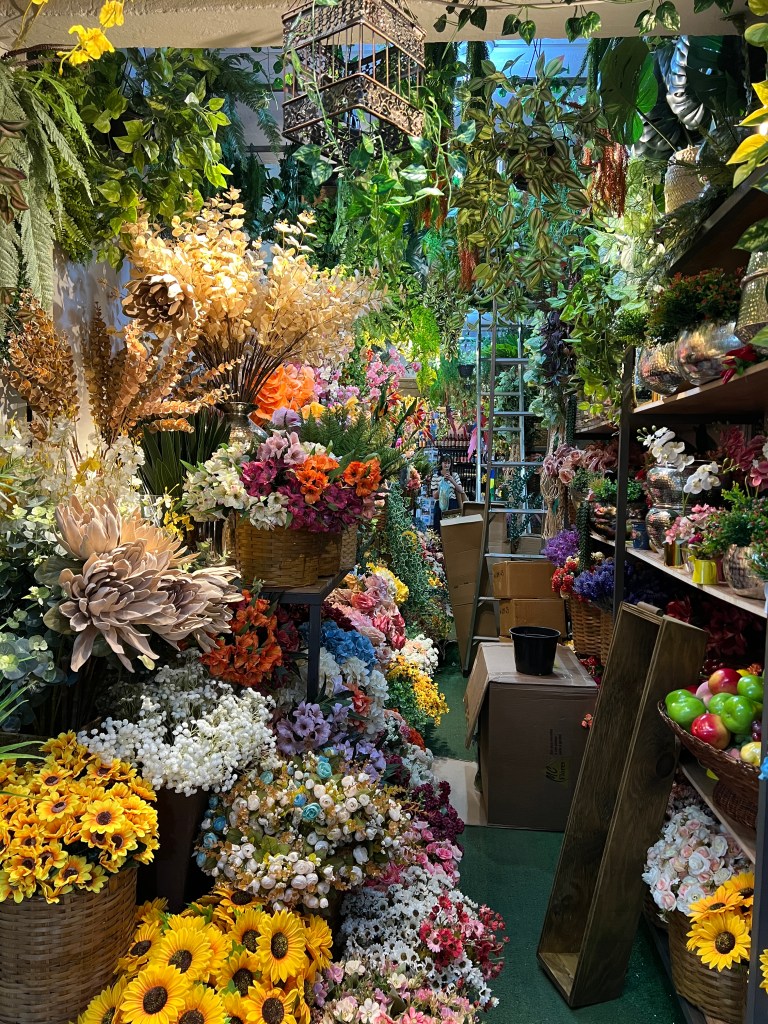
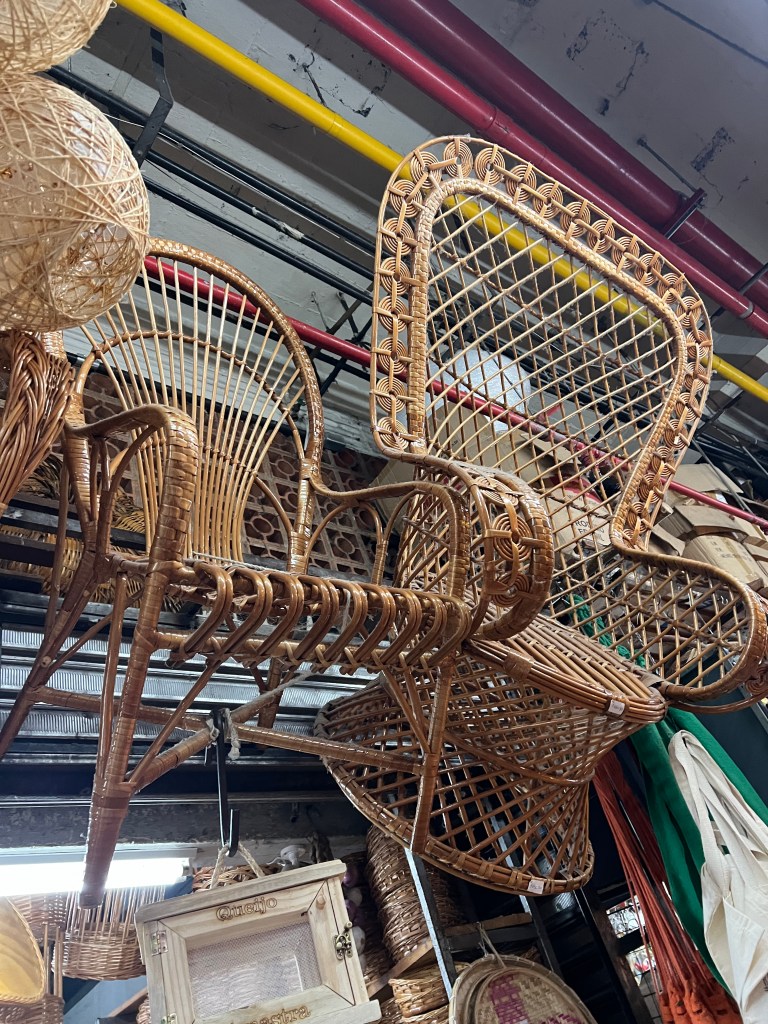
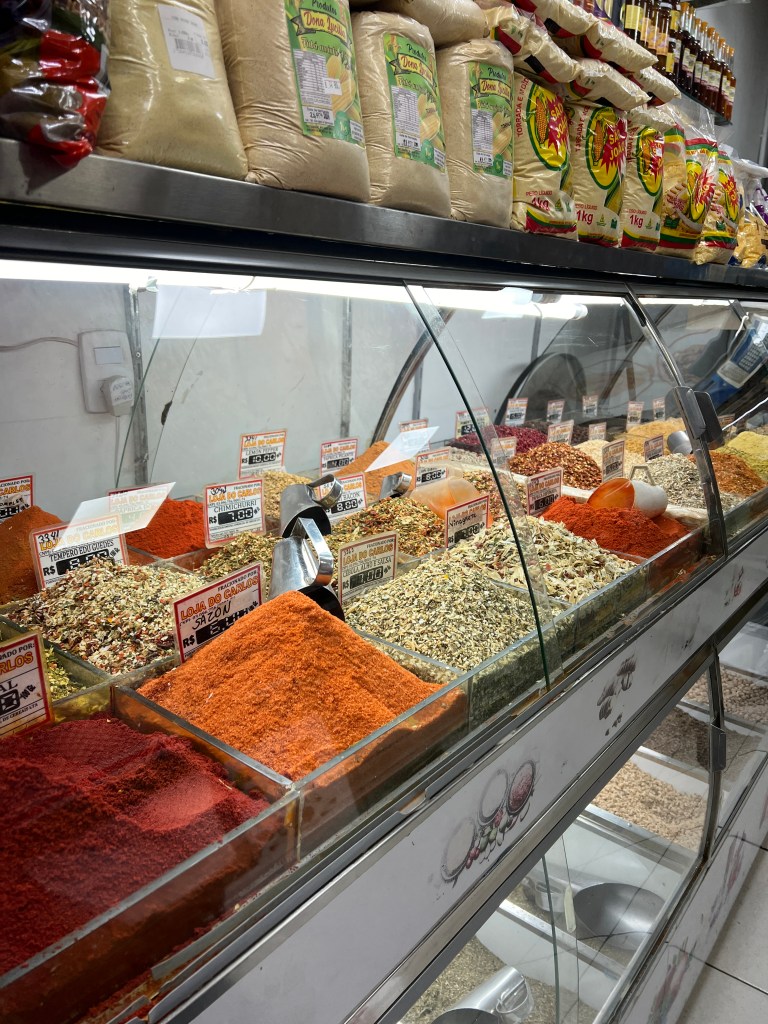
Around each corner was a new sight or smell. Buckets of fresh peppers in every size and color of the rainbow, mountains of vibrant spices and dried fruits. We walked past butcher shops with whole carcasses being expertly carved. Wicker furniture, pottery, jewelry, and sandals spilled out of stands, enticing you in to see what else they had to offer.
We were there early enough to avoid the rush of people, but my coworker assured me that as the course of the day went on, the aisles would soon be flooded with people, stopping for lunch at the in-market restaurants serving feijão tropeiro, a bean dish with pork and cassava flour. Every so often, I’d catch a waft of overripe fruit, roasted coffee, fresh baked pão de queijo (Brazilian cheese bread), or roasting meat.
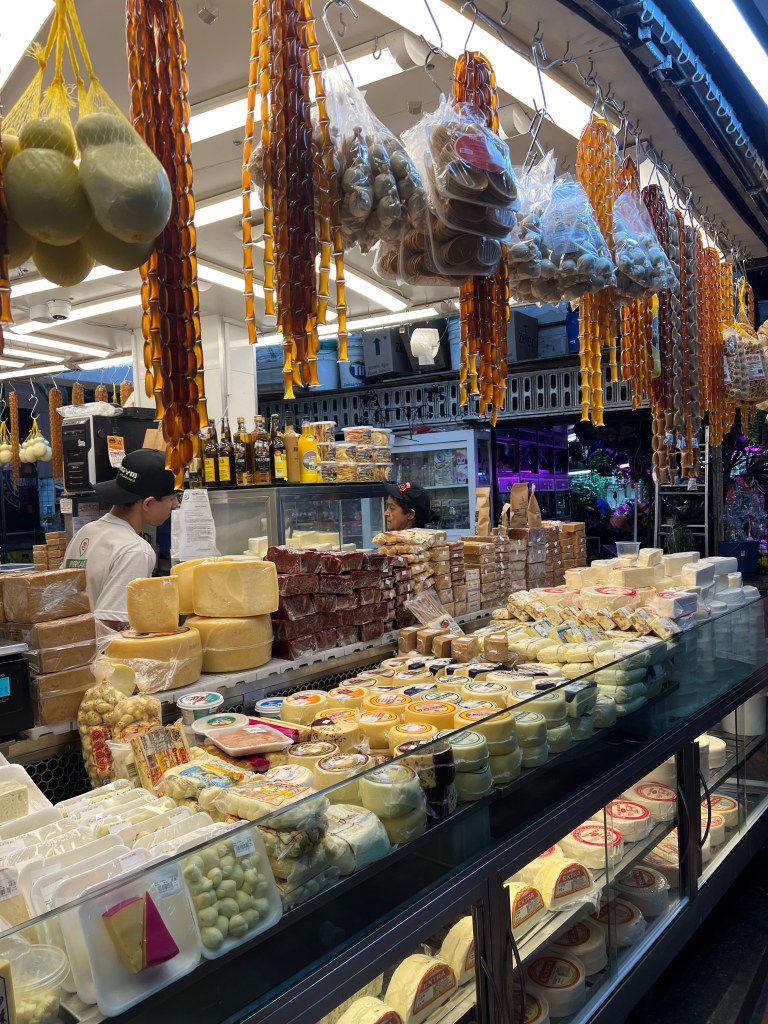
We stopped at one of the many stands selling cheeses. There were dozens of different varieties – soft cheeses, hard cheeses, aged cheeses, fresh cheeses – and formats – rounds, slices, and even pre-skewered rectangles of cheese, ready to grill. Nearby were neatly wrapped packages of goiabada or guava paste. The paste was similar in texture to membrillo (quince paste, used in a previous recipe), congealed, firm and sliceable. In Brazil, the combination of guava paste and local minas cheese is dubbed Romeu e Julieta, or Romeo and Juliet, and is frequently served as dessert. Those with a particular sweet tooth will also add a dab of dulce de leche on top.
I purchased some cheese and the firm guava paste to take home – as soon as I saw the paste in that unique format, inspiration had struck.






Guava and cheese is a beloved combination in more places than just Brazil. Cuba is known for their guayaba y queso pastelitos, where tangy cream cheese, sweet guava paste, and crisp buttery pastry create the perfect bite. In Puerto Rico, slices of salami, guava paste, and salty cheddar cheese are served on a buttery cracker and considered entremeses tipicos, typical appetizers. Guava brings sweet, cheese brings salty – a perfect pairing.
Given this flavor combination is a certified winner, I wanted to incorporate them into a savory cookie. Seeing the guava paste, my mind immediately went to “Church Window” cookies. In these cookies, you coat multi colored mini marshmallows in melted chocolate and form the mixture into a log. After cooling, you slice the log into “cookies” – each cookie cross-section contains a mosaic of colorful marshmallows.
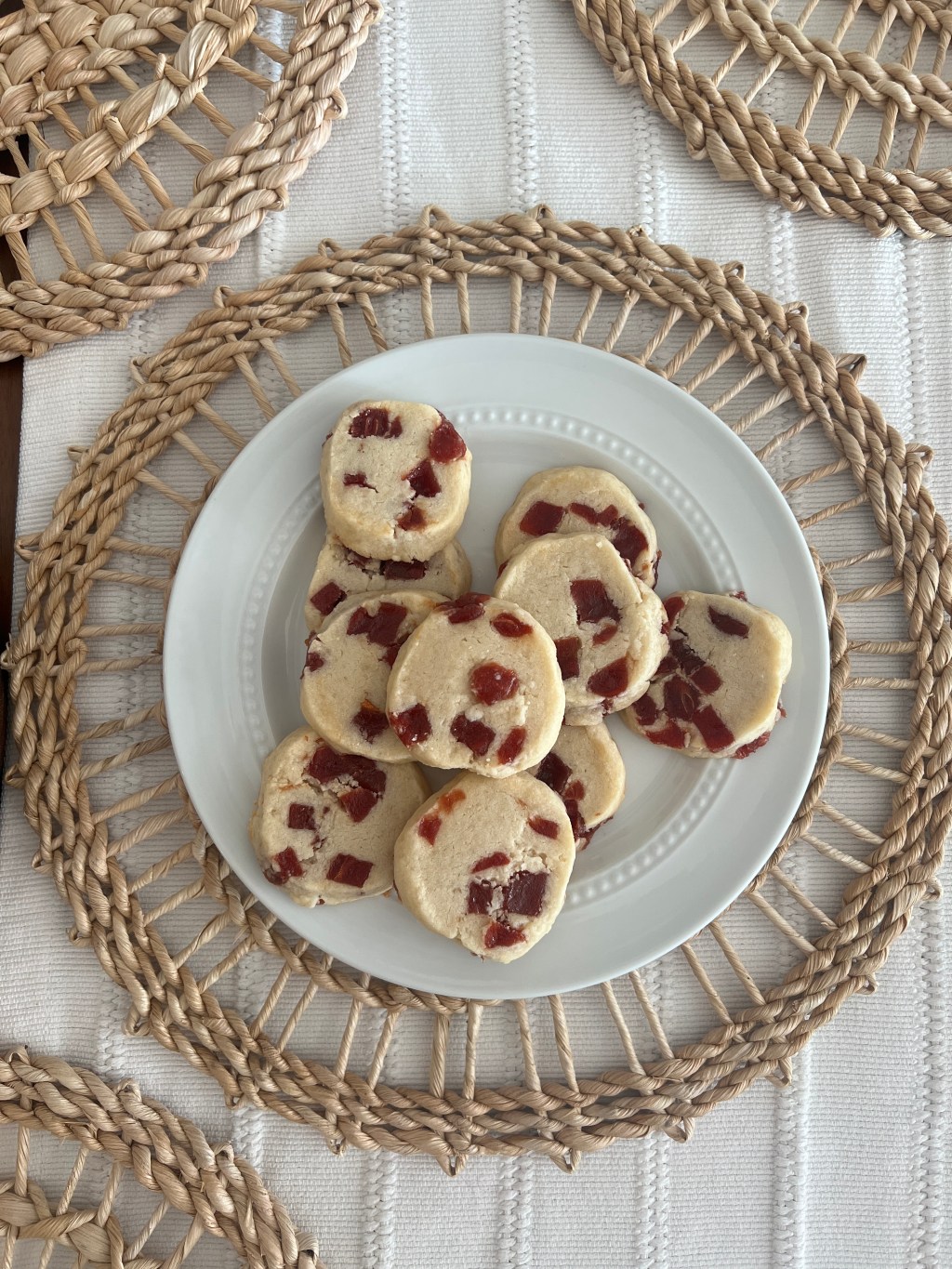
In my head, though, I envisioned a cheesy, buttery cookie, studded with gems of chewy guava paste. Making a cheese cookie was a straightforward task – I used my learnings from my Basil Parmesan Checkerboard Cookies to create a white cheddar shortbread, maximizing the salty, buttery profile. I wasn’t certain if the guava paste would incorporate as I envisioned – would it slice, what would happen in the oven? – but I forged ahead.
And that’s how the recipe for white cheddar guava shortbread was born. Aproveitar!
| savory-ness (1-5) | 4 – cheesy with a chance of guava |
| weird or works? (complimentary flavors or a little bit weird?) | works! |
| savory ingredients highlights | white cheddar cheese |
| best served… | with a cold caipirinha |
| encore? | more guava and cheese, please! |
White Cheddar Guava Shortbread
Inspired by a classic Latin American pairing, these buttery white cheddar shortbread cookies contain pockets of tangy, sweet guava paste or goiabada as it’s called in Brazil. Every bite packs a sweet-salty punch and will have you reaching for more!
Makes 2 dozen cookies
Kitchen Equipment
- Kitchen scale – this will help ensure precise measurements and a foolproof bake!
- Food processor – a fast and foolproof way to make shortbread dough is to incorporate the butter into the flour/cheese mixture in a food processor.
Ingredients
- 70g granulated sugar
- 1 tsp salt
- 238g AP flour + additional for dusting
- 1 stick unsalted butter, cold
- 8 oz white cheddar
- 5 oz guava paste*
*Note on guava paste: make sure you are using a firm-textured, sliceable guava paste. Sometimes referred to as “goiabada”, this paste comes in block format and may be found at speciality Latin American grocers or online. For anyone based in New York City, there’s a great Brazilian specialty store in midtown called Búzios: The Original Brazilian Market. There you can find specialty Brazilian foods like pão de queijo, minas cheese, guava paste, teas, cassava flour, and brigadeiros (made fresh, daily). You can also find some of Brazil’s best exported goods like Havaianas, bath and body products, bathing suits, and more!
Instructions
- Using a box grater, grate 8 oz of white cheddar cheese into a bowl. Whisk together the flour and salt. Add the grated cheese and mix to combine.
- In a food processor, add the flour, cheese, and salt. Cube the butter and add to the food processor. Pulse until a loose dough forms – you should see large pea-sized crumbs.
- Dice the guava paste into ¼ inch cubes. Note that the guava paste is quite sticky and may be time consuming to slice. The cubes will stick together.
- In a bowl, add 2-3 tablespoons of flour. Toss the guava cubes in the flour until each cube is coated in flour and they are no longer sticking together.
- Add the guava cubes to the cheddar shortbread dough. Mix the cubes to evenly distribute them throughout the dough. Form the dough into two 10×1.5 inch logs and tightly wrap them in parchment paper or beeswax wrap. Chill the logs in the fridge for 1 hour and up to overnight.
- Once the dough is chilled, unwrap the log and slice it into ¼ inch thick rounds. Place on a baking sheet about 1” apart.
- Bake the cookies at 350ºF for 18-20 minutes, until the edges are lightly golden. When you take the cookies out of the oven, if any guava paste has melted around the edges of the cookies, use a spatula to press the melted paste back into the cookie. Let fully cool. Savor, and enjoy!
 Savor Tooth Snacks
Leave a comment