
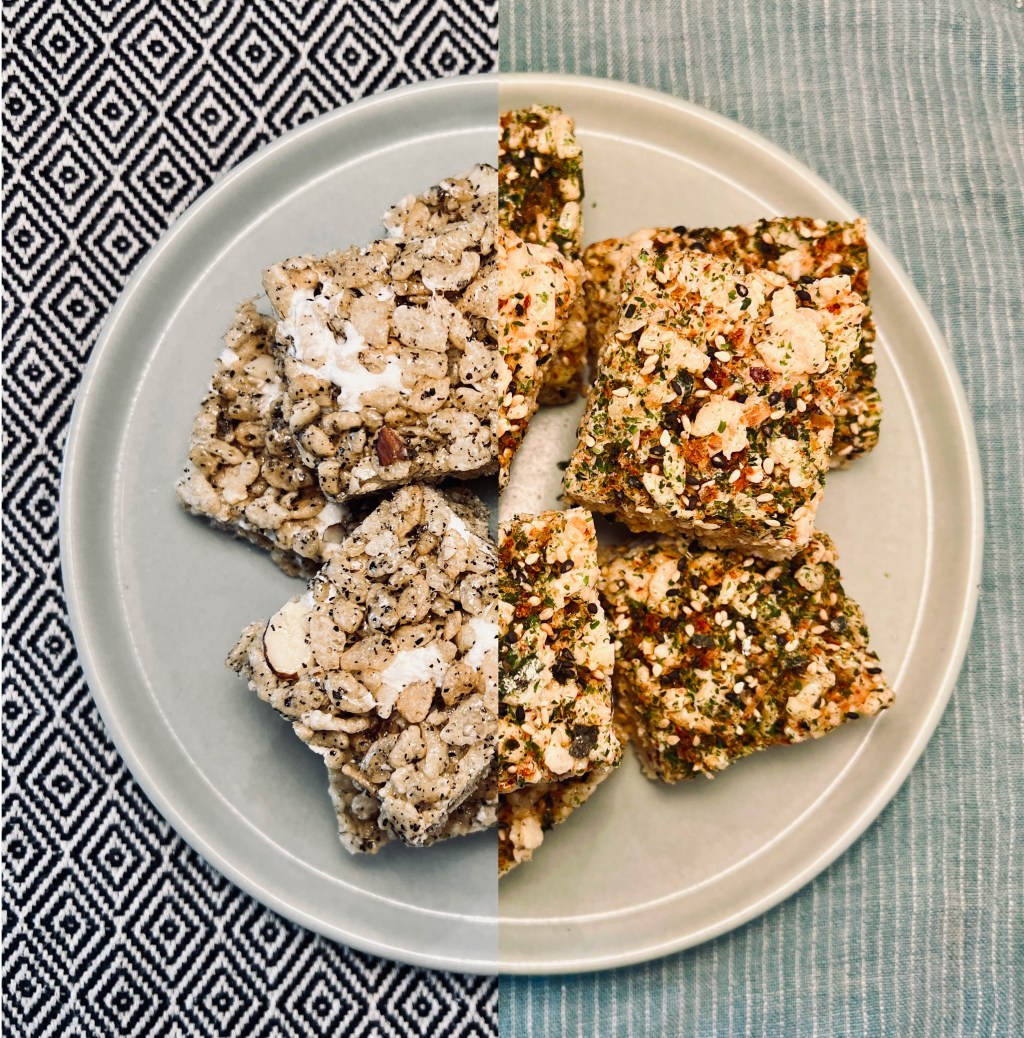
Following the challenges of my last baking project, I thought I’d take it a little easier this week. Enter: the rice krispy treat. Rice krispy treats are the epitome of easy – in their simplest form, they only require three ingredients: marshmallows, butter, and Rice Krispies cereal. You can pull together a batch in less than 15 minutes, and they are ready to cut and serve in less than 30. However, a classic rice krispy treat doesn’t exactly meet the brief of savory, so I turned to two different recipes for inspiration:
Recipe 1: Toasted Pinipig Marshmallow Treats from Abi Balingit’s cookbook Mayumu
Mayumu is a collection of Filipino American desserts, intermixing Filipino and American flavors and formats to create brand new creations: Strawberry Shortcake Sapin Sapin (Layered Rice Cake), Kare-Kare thumbprint cookies filled with bagoong (fermented shrimp paste) caramel, Ube Cheesecake Bars, and more. Balingit includes essays about her childhood and her experience as a Filipino American and how it has informed her palate. She self-admits to inheriting a preference for sour and fishy flavors and doesn’t shy away from incorporating them in all of her desserts. For many of these recipes, the result is a more balanced flavor profile: savory, tart, and sweet working together to create a more complex, layered experience.
Balingit’s Toasted Pinipig treats lean savory in a few different ways:
- Toasted pinipig – pinipig is a Filipino ingredient that’s also known as pounded young rice. These flattened grains are toasted to bring out their flavor and often are added as toppings to various Filipino desserts.
- Toasted sesame oil – a little goes a long way, but toasted sesame oil is one of the easiest ways to add instant depth and nuttiness to a dish.
- Furikake – the ultimate umami seasoning, furikake is a mixture of sesame seeds, seaweed, fish flakes, and salt. Furikake recipes, however, can vary, something which we’ll get back to later.
While most of these ingredients can be found at nearly any grocery store, there was one that required a bit of searching: pinipig. While theoretically yes, you can order many specialty ingredients online, I am not the kind of person who is willing to plan so far in advance, even with Amazon prime shipping timelines. Fortunately, living in NY, the abundance of different cultures and cuisines mean that somewhere in the five boroughs, there will be a specialty grocer that sells exactly what you are looking for. In the case of pinipig, I was on the hunt for a Filipino grocery store.
On a snowy Sunday, I dragged my partner to Manhattan in search of this single ingredient, what one might call a hare-brained scheme. We found ourselves trying our luck at H-Mart, a Korean grocery store, hoping their wide selection of Asian ingredients might possibly include pinipig. It did not, but it did give us an excuse to peruse the various aisles and pick up lunch from the food court: shrimp shumai, spicy bulgogi rice, and deep fried crab bites.
A more targeted Google Maps search brought us to Johnny Air Mart, advertised as an “unassuming grocery store specializing in Filipino dry goods, precooked snacks, noodles & meals.” Sure enough, when we walked in and asked if they carried pinipig, two women walked me over to a freezer. One of the women pulled out a plastic bag with a label that read “reserved for pick up 1/15.” She completely disregarded this note and opened the bag and handed me a package of Pinoy Fiesta Pinipig – one of the last few they had, and technically, already spoken for. It was a heartwarming, hilarious interaction, and goes to show why you should always shop mom and pop.
Recipe 2: Oolong Milk Tea with Almond Rice Crispy Treats from Frankie Gaw’s cookbook First Generation
First Generation is a series of recipes inspired by Gaw’s Taiwanese-American upbringing. His recipes embody his experience growing up a first-generation Asian American, bridging the gulf between cultures and cuisines. All-American nostalgia plays a prominent role: he references his love of Costco corn dogs with his Lap Cheong Corn Dogs; Cincinnati Skyline chili makes an appearance; and his dessert chapter titled “Bake Sale” plays homage to beloved breakfast cereals like Cinnamon Toast Crunch, Reese’s Puffs, and Cap’n Crunch. Other recipes are more traditional Taiwanese family recipes: Grandma’s Pearl Meatballs, Mom’s Tomato Seafood Stew, Childhood Fried Rice. He doesn’t force-fuse the two cultures, but rather lets his two halves intermingle, sometimes overlapping, sometimes standing alone but together.
Gaw’s Oolong Milk Tea treats are decidedly more sweet than savory, but there are a few nods to salty, nutty flavors in his recipe:
- Oolong tea – although not necessarily a savory ingredient, oolong tea does bring a toasty, almost grassy flavor to the table.
- Almonds – nuts, in my opinion, are a great way to add texture and nuttiness and balance out sweetness.
- Miso – though not actually listed as an ingredient in the recipe, Frankie does add a spoonful of miso to his treats when making them on instagram. Miso is an umami bomb and brings salt and funk thanks to fermentation.
I set out to make both rice krispy treat recipes in an afternoon, but upon reading the recipes in more detail, realized it would require a bit more operational planning than anticipated.
See… while I had wanted to take it easy on myself this week, when I read Abi Balingit’s recipe in more detail, I saw an interesting note next to one of the ingredients: “10 oz marshmallows, store-bought or 1 recipe Double-Toasted Coconut Marshmallows, page 91”
On one hand, it is a bit insane to make homemade marshmallows, only to immediately melt them back down for the purpose of making rice krispy treats. On the other hand, these weren’t just ANY rice krispy treats. And toasted coconut did seem like a tempting addition to an already intriguing ingredient list.
The addition of the Double-Toasted Coconut Marshmallows brought with it yet another sub-recipe: “¼ cup Latik, page 30”. Latik, aka toasted coconut curds, are another common Filipino dessert topping made by cooking down coconut cream until you are left with coconut oil and golden brown coconut bits that lean almost salty in flavor. Making latik is an exercise in patience as it takes nearly 2 hours to prepare, but the final result is a wonderful savory, textural addition to your pantry.
And so, two recipes had somehow doubled to become four. My baking schedule was as follows:
- Boil sugar for marshmallows while blooming gelatin in stand mixer
- Make marshmallows once sugar syrup reaches 235°F
- Set marshmallows aside to set (~4 hours), clean out sauce pot and bring coconut cream to a boil; put coconut cream on back burner to simmer (~2 hours)
- Clean up and make the Oolong Milk Tea and Almond Rice Crispy Treats
- While oolong treats are cooling, toast pinipig and shredded coconut separately, set aside
- Cut oolong treats
- Strain the latik; add to the toasted shredded coconut
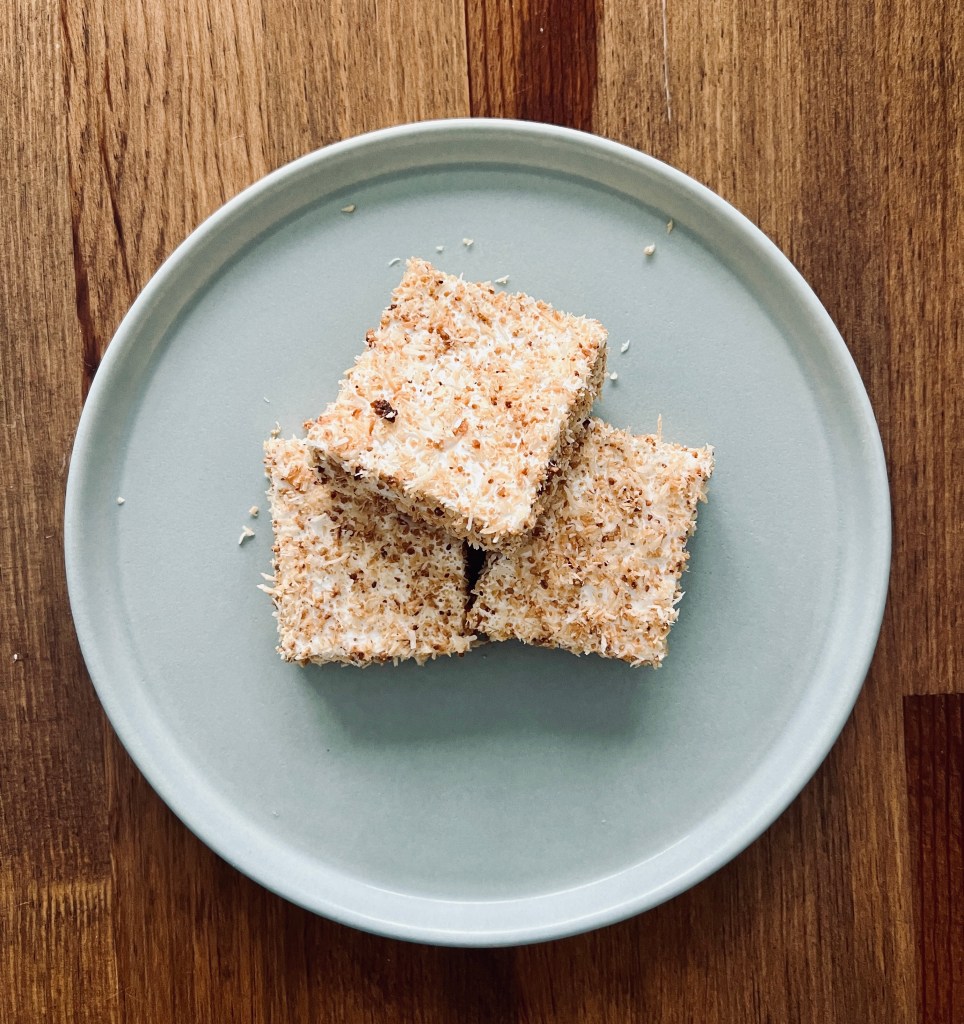
- When marshmallows are set, cut them and toss in shredded coconut and latik combo
- Eat a marshmallow; wish that you didn’t have to destroy them because they look so good, so take a picture
- Destroy marshmallows by making Toasted Pinipig Marshmallow Treats
- Cool and cut toasted pinipig treats
Though the task list was daunting, everything was straightforward to make, INCLUDING the homemade marshmallows, which I was initially a bit intimidated by. By the end of the day, I had two Jenga-esque stacks of rice krispy cubes, ready for taste-testing.
We had two friends over for dinner (our trip to H-Mart had inspired a Korean menu of bulgogi Impossible over rice, spicy tteokbokki, and cold pickled cucumbers). I was eager to get to dessert to see their thoughts on two very unique, but very different, rice krispy treat recipes.
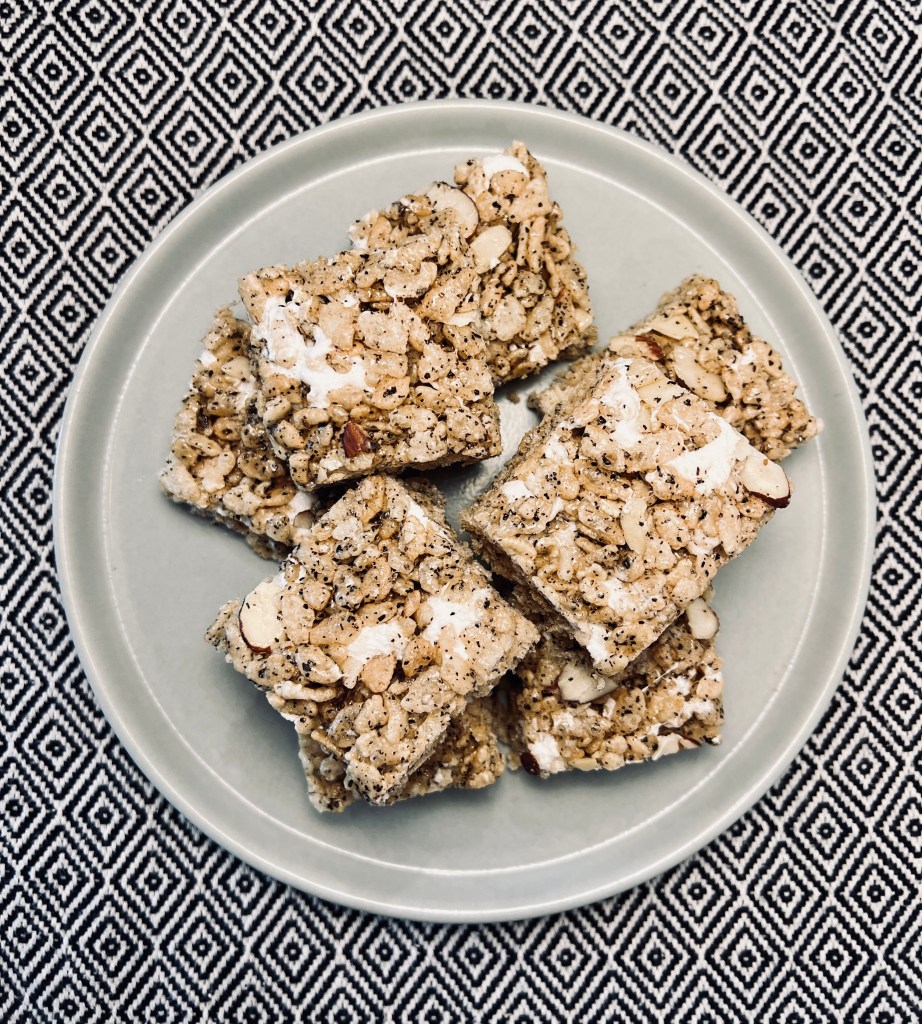
The oolong milk tea treats were first up. In my opinion, they were a bit too crispy (maybe due to over browning of the butter or the addition of cooked sugar in the form of melted miso), but they received rave reviews. The almonds and whole marshmallows were a nice textural contrast, and the oolong was a subtle but welcome addition to the classic bake-sale treat. However, the miso was definitely lost in the sweetness (maybe why it didn’t make it to the final version of the recipe?), and these treats, though delicious, were decidedly not-savory.
Next up, the toasted pinipig treats. Our vegetarian friend sat this round out, citing the inclusion of bonito flakes in the layer of furikake that coated each square. A part of me suspects, however, that this was less about sticking to a moral code and more an aversion to the fishy smell. These treats seemed a better contender for the title of savory, but they also posed a risk of getting into weird flavor territory. I was stressed – was all my hard work for nothing? The rest of us took a bite. The reactions were… mixed. The combination of toasty, sweet and fishy is unusual and takes time to appreciate and unpack. Upon reading Balingit’s recipe description again, I noted her reference to Trader Joe’s brand furikake which does NOT include bonito flakes. Fish-free. Our furikake-brand of choice, on the other hand, like many traditional versions of furikake, was packed with the fishy flakes. Their absence, no doubt, would pose a less challenging flavor combination to grasp. Still, even with the inclusion of bonito, there was something about them that made me go back for another bite. I was torn. Were these a flop? I needed more input to decide.

Enter: the Rice Krispies Treat Taste Test.
I decided to take both treats to my office with two goals in mind:
- crowd-source more feedback on the two treats
- get rid of the mountain of rice krispy treats sitting on our kitchen counter aka sharing the love
I made some signage providing details on the two recipes (including allergens – always important when sharing food with strangers) and packed up boxes of the treats and toothpicks to make the whole operation a bit more sanitary (after-all, it is flu season). At lunch time, I set up near one of the cafes in our building and waited.
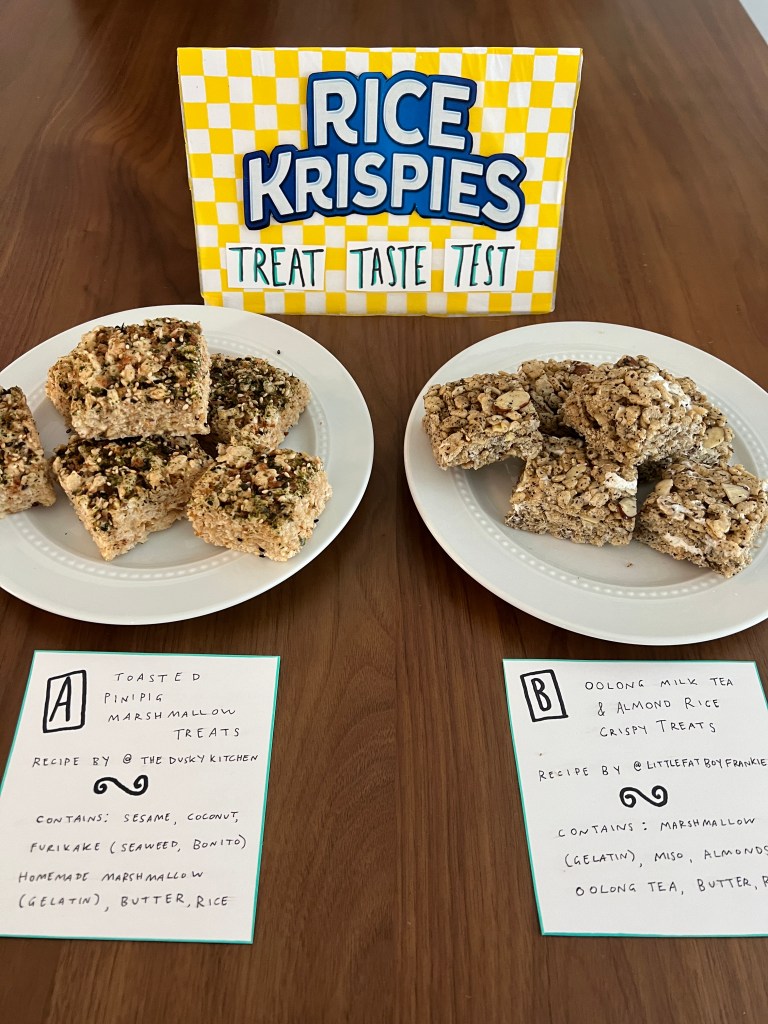
Initially, I mostly got confused glances or outright avoidance of eye contact. I definitely stood out, and I suddenly felt very self-conscious. But, instead of packing up and walking away, I swallowed my embarrassment and smiled, asking people if they were interested in trying a rice krispy treat. Finally, I got some brave souls to stop and participate in my experiment. I asked their preference between the two, what they liked and didn’t like, and their overall thoughts on the idea of sweet and savory flavor interplay. By the end of the hour, 14 people had stopped, tasted, and chatted. The results were surprising. In the rice krispy treat battle royale, the winner was…
Neither! It was a tie. Of the 14 people who tried the treats, only 12 tried both (one person was allergic to almonds, the other was in a rush to grab lunch). Of those 12, 6 preferred the toasted pinipig treats and 6 preferred the oolong. Everyone, however, thought both treats had merit. The consensus was that the oolong leaned more toward the traditional, sweet rice krispy treat style while the toasted pinipig treats were more surprising in texture and flavor. Toasted pinipig won in the contest of most-savory, and more than one person said they would find themselves eating the entire box of the oolong treats. Surprisingly, those that didn’t like the pinipig didn’t call out the bonito flakes as the culprit, but rather the inclusion of coconut, which many people cited as an ingredient they dislike.
One comment that stood out was regarding the pinipig treats: “Of the two, I’d rather eat one of these [pinipig treats] if I was hungry… but I’d only need one to feel satisfied.”
Is there something about savory flavors that make us feel more full? Do salty, umami flavors do a better job of satiating our appetites? Evolutionarily, this makes sense. Savory foods tend to be higher in protein, fiber, and healthy fats, nutrients which are critical to our diets as they do a better job at providing sustained energy over a period of time. Still, this didn’t stop us from craving the energy and dopamine boost provided by sweet treats, so it probably isn’t as simple as that.
Food and flavor preferences are built and change over one’s lifetime and can be impacted by a variety of factors: cultural heritage, environmental exposure to new flavors due to travel, relationships, or the prevalence of certain cuisines in your town or neighborhood. Socio-economic factors play a role – think about ‘food deserts’ and how availability of certain foods can play a role in what you eat and what you develop an affinity for. Even your genetics can impact your preference – research has identified genes associated with dietary patterns (e.g. a preference for high-sugar foods) and even specific foods (fruit, cheese, or alcohol).
It’s hard to say how my flavor preferences will shift as a result of this culinary exploration. Will I double down on the savory? Or will I find myself needing some sweetness to cut the salt? One thing I can say for certain is that this will push me towards cuisines, ingredients, and flavor combinations I’ve never had before. I hope that I discover new favorites along the way, and maybe, one day, transform that inspiration into my own culinary creations.
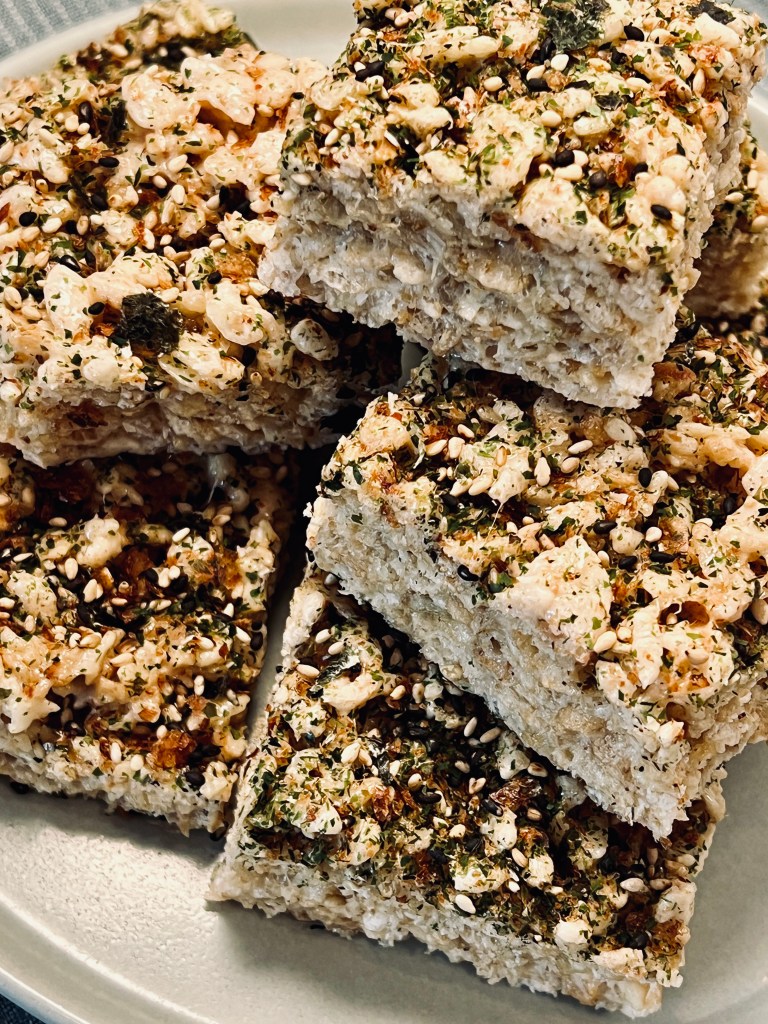
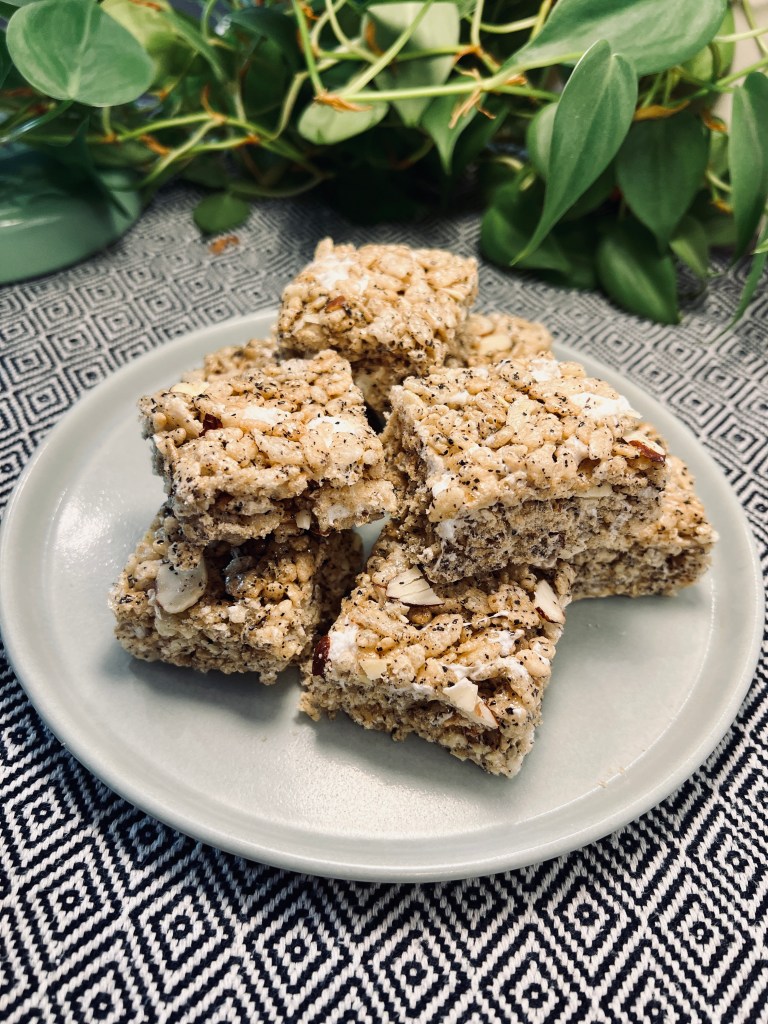
| Toasted Pinipig Marshmallow Treats | Oolong Milk Tea with Almond Rice Crispy Treats | |
| savory-ness (1-5) | 4 – the furikake really brings a savory element | 1 – not savory, but still delicious |
| weird or works? (complimentary flavors or a little bit weird?) | weird – probably due to the brand of furikake which included bonito flakes | works – oolong, miso, almond all work so well with marshmallow and toasted rice |
| savory ingredients highlights | toasted pinipig, sesame oil, furikake | miso, almond |
| best served… | when you’re looking for a savory, sweet pick-me-up | with a warm cup of genmaicha tea |
| encore? | I think so – but maybe no bonito flakes next time | definitely! A great addition to the bake sale. |
 Savor Tooth Snacks
Leave a comment